
Healthcare Practice Management
15 mins
Top 18 Healthcare Software Development Companies in 2026
Summary
Your Competitors Are Embracing AI – Are You Falling Behind?
Finding the right healthcare software development companies can determine whether your digital health project succeeds or fails.
With HIPAA compliance requirements, complex EHR integrations, and the need for specialized regulatory expertise, choosing a partner requires careful evaluation beyond typical software vendor selection.
The global healthcare IT market reached $663 billion in 2023 and continues growing at 15.8% annually. This expansion has created demand for custom healthcare software development companies that understand both technical requirements and the unique challenges of building compliant medical solutions.
This guide profiles 18 of the top healthcare software development companies in the USA and globally, covering their specializations, notable projects, and what makes each a strong choice for different types of healthcare software projects.
TL;DR
- Healthcare software development costs typically range from $30,000 for basic applications to $500,000+ for enterprise platforms
- HIPAA compliance is non-negotiable and adds 15-30% to development costs
- Top companies offer expertise across telemedicine, EHR integration, patient portals, and AI diagnostics
- Project timelines range from 4-6 months for MVPs to 18-24 months for comprehensive hospital systems
- Prioritize vendors with ISO 13485 certification and proven experience in healthcare regulatory environments
The Growing Market for Medical Software Development Companies
Healthcare organizations face mounting pressure to digitize operations while maintaining strict compliance standards.
The COVID-19 pandemic accelerated this shift dramatically, with telemedicine adoption increasing by over 3,000% in 2020 alone. This transformation created sustained demand for healthcare software development solutions capable of securely handling sensitive patient data.
Medical software development companies now serve a broad spectrum of clients: from digital health startups building their first MVP to hospital networks modernizing legacy systems.
The fastest-growing segments include AI-powered diagnostics (35%+ CAGR), remote patient monitoring, and interoperability platforms built on FHIR and HL7 standards.
Software healthcare companies that specialize in this sector bring critical advantages over generalist developers. They understand the regulatory landscape, have pre-built compliance frameworks, and know how to navigate the complex ecosystem of healthcare data standards.
This specialized expertise typically reduces project risk and accelerates time-to-market for healthcare applications.
18 Best Healthcare Software Development Companies in the USA in 2026
The following healthcare software development companies list represents vendors with proven track records in delivering compliant, scalable medical software.
Each company has been evaluated based on healthcare-specific expertise, regulatory certifications, client portfolio, and technical capabilities.
1. ScienceSoft
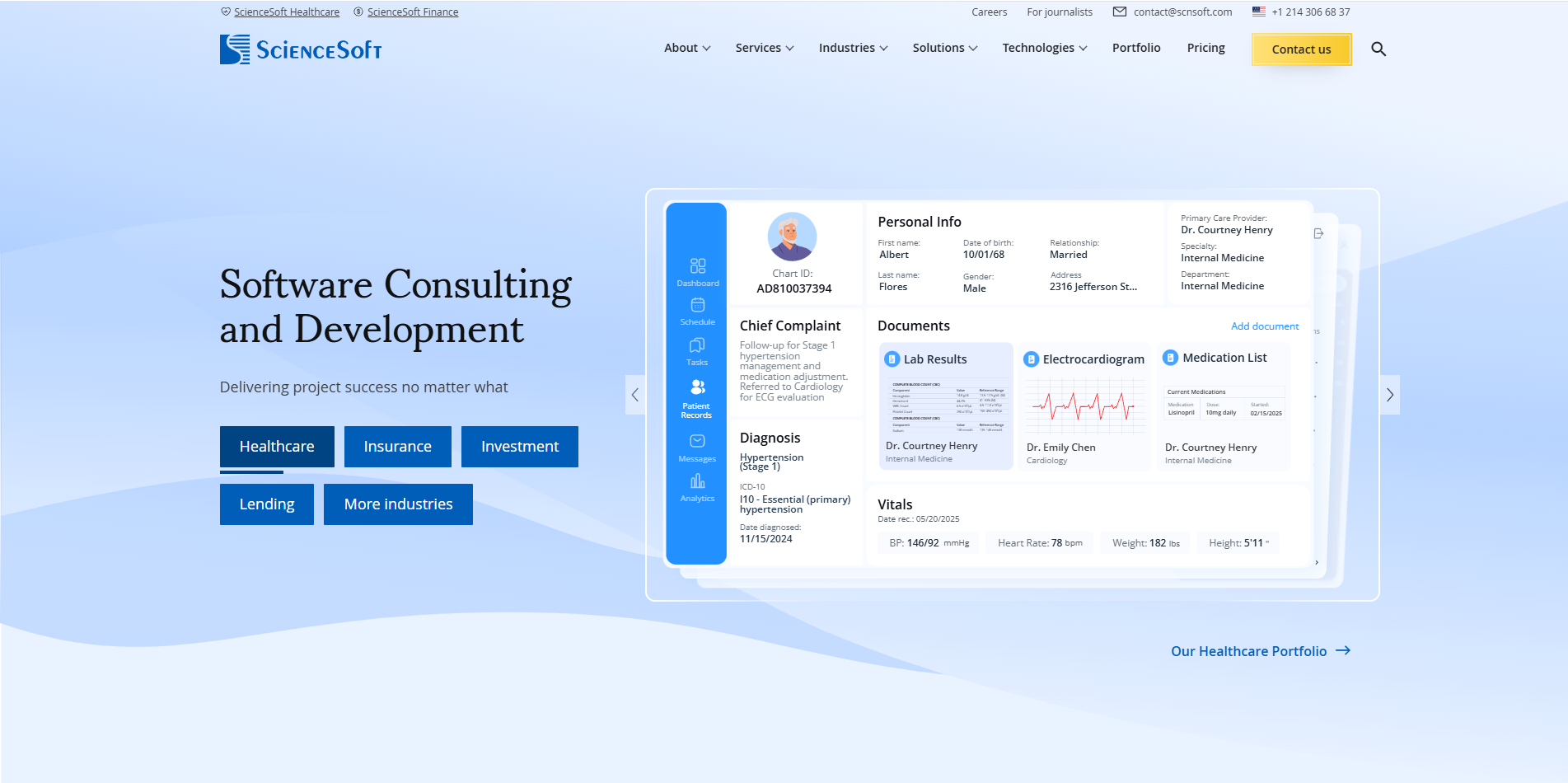
ScienceSoft brings over 35 years of software development experience with a dedicated healthcare practice spanning 20+ years.
The company holds ISO 13485 and ISO 27001 certifications and maintains a team of 750+ professionals, including an in-house medical consultant.
Their healthcare portfolio includes HIPAA-compliant HIE solutions, telemedicine platforms, EHR systems, and FDA-regulated medical device software.
Notable projects include building patient portals that attracted 1,500+ users within three months of launch and developing IoT platforms for rehabilitation with custom motion capture algorithms.
Best for: Enterprise healthcare organizations needing comprehensive compliance support and integration with existing medical infrastructure.
2. Itransition
Itransition has delivered healthcare software solutions for over two decades, serving hospitals, diagnostic centers, pharmaceutical companies, and medical device manufacturers.
Their expertise spans EHR systems, telemedicine platforms, and clinical analytics solutions.
The company handles FDA classes II and III and IEC 62304 classes A, B, and C for medical devices. Their analytics suite manages over 500 million patient records and several dozen petabytes of proprietary data for healthcare clients.
Best for: Organizations requiring FDA-compliant medical device software or large-scale healthcare analytics platforms.
3. Leobit
Leobit is a full-cycle custom software development company with over 10 years of experience delivering 150+ digital solutions, with a strong focus on HealthTech.
The company holds ISO 9001:2015 and ISO 27001:2022 certifications and complies with HIPAA, GDPR, CCPA, and OWASP standards.
Leobit develops healthcare software solutions, including EHR/EMR systems, telemedicine platforms, patient engagement tools, and clinical decision support systems, with AI capabilities for medical data analysis, workflow automation, and predictive analytics.
Best for: Healthcare providers and hospitals, HealthTech companies and startups, pharmaceutical companies looking to build AI-driven healthcare solutions.
4. Technology Rivers
Technology Rivers is a U.S.-based healthcare software development company with deep expertise in building HIPAA-compliant digital health platforms for startups, providers, and healthcare enterprises.
The company has delivered 50+ healthcare products and 23+ HIPAA-compliant systems, with capabilities spanning FHIR and HL7 integrations, cloud-native architecture, healthcare workflow automation, and AI-enabled healthcare applications.
Their healthcare portfolio includes telemedicine platforms, remote patient monitoring (RPM) software, patient engagement applications, EHR/EMR-integrated systems, and scalable healthcare SaaS products designed for secure, real-world deployment.
Notable projects include remote patient monitoring solutions, AI-enabled healthcare applications, patient scheduling and communication platforms, and healthcare mobile apps focused on improving care coordination and operational efficiency.
Best for: Healthcare startups and growing digital health companies seeking a compliant, scalable development partner with expertise in healthcare AI, interoperability, and rapid product development.
5. ELEKS
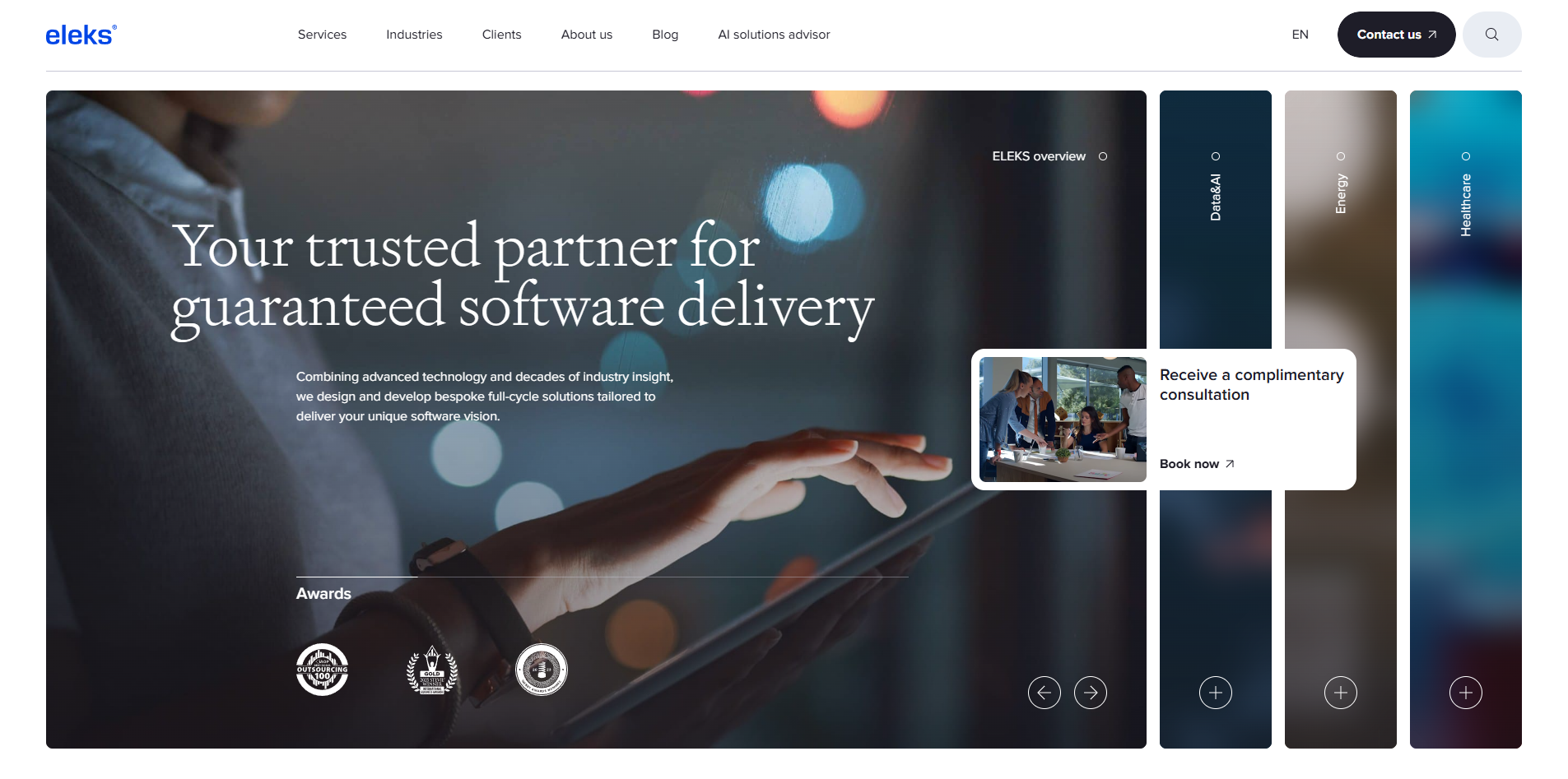
ELEKS specializes in AI-powered healthcare solutions that help providers leverage data for clinical decision-making.
Their approach emphasizes customization at scale, building platforms that grow with healthcare organizations rather than requiring wholesale replacement.
The company is known for seamless integration with legacy systems, enabling organizations to transition to modern platforms without operational disruption.
Their patient-centric focus drives both improvements in care quality and operational efficiency.
Best for: Healthcare providers modernizing legacy systems while maintaining operational continuity.
6. Arkenea
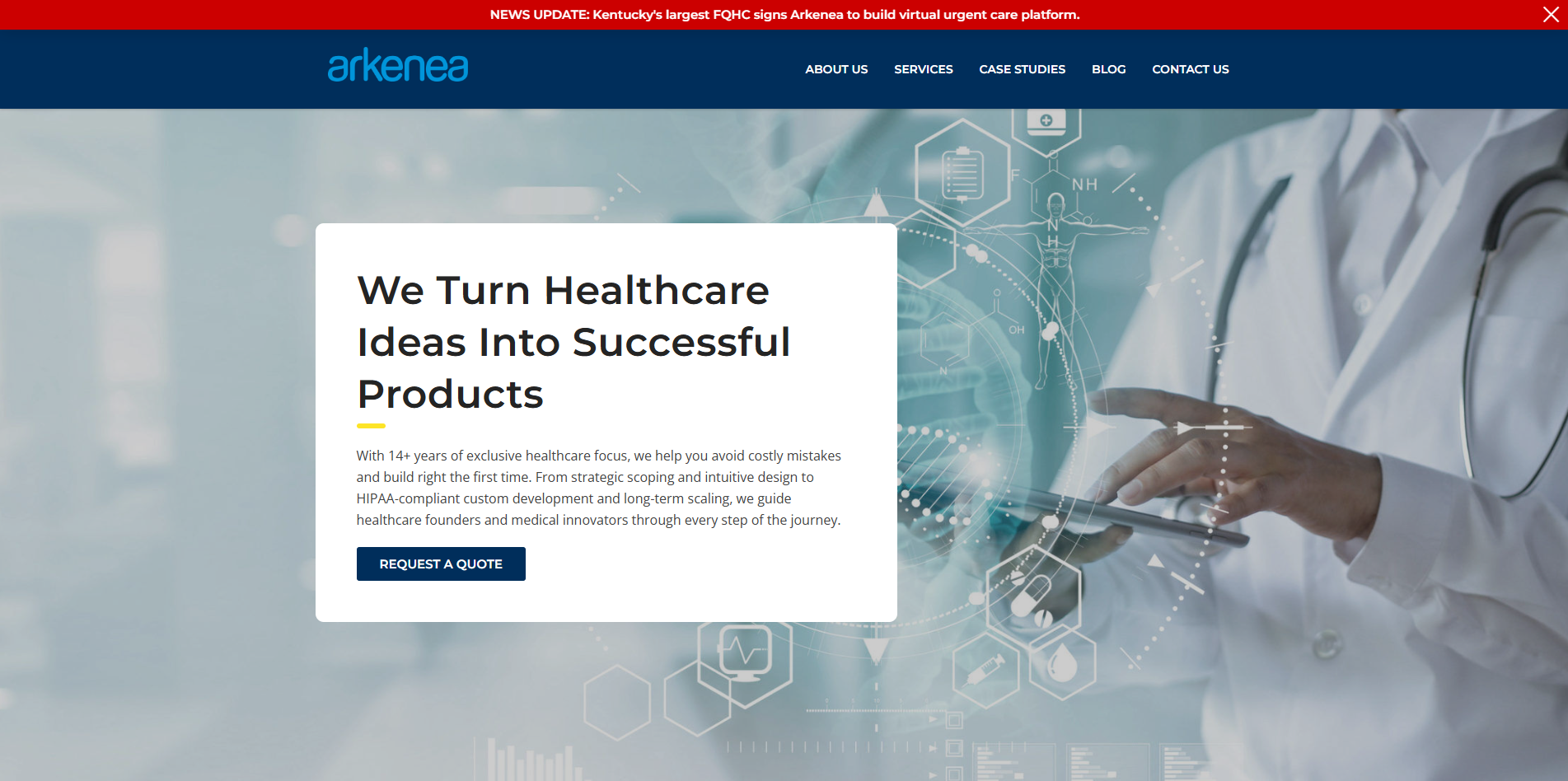
Arkenea operates exclusively in healthcare, with 14+ years focused solely on medical software development. This specialization means every team member understands healthcare regulations, workflow requirements, and the clinical context of the software they build.
Their work spans telemedicine platforms, patient portals, practice management systems, and medical device companion apps. They navigate both MDR/FDA device regulations and patient-facing usability requirements with equal expertise.
Best for: Healthcare organizations wanting a vendor with 100% healthcare focus and deep regulatory expertise.
7. Computools
Computools builds end-to-end digital health ecosystems that replace fragmented tools with secure, scalable platforms.
Their expertise covers telemedicine, EHR/EMR systems, IoMT, clinical AI agents, remote patient monitoring, and regional health intelligence platforms.
Client results include 50% faster digital healthcare workflows, 35% lower operational expenses, and 50%+ revenue increases after digitalization.
They focus particularly on solving fragmented systems, manual workflows, and staff shortages that plague many healthcare providers.
Best for: Healthcare organizations seeking comprehensive digital transformation with measurable operational improvements.
8. TechMagic
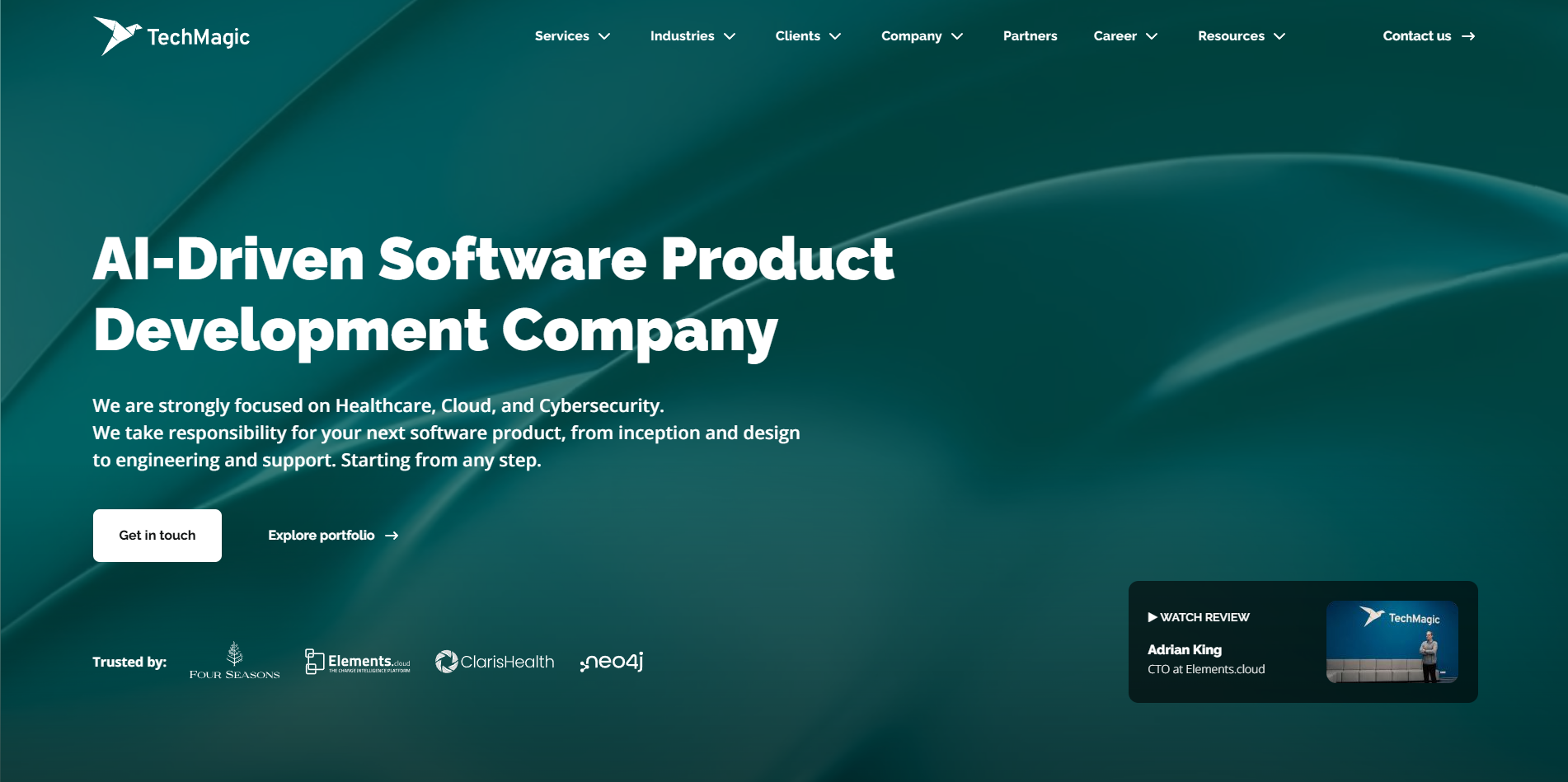
TechMagic delivers custom healthcare software solutions with particular strength in AI-based diagnostic tools, patient monitoring systems, and data analytics platforms.
Their development approach emphasizes solving complex healthcare-specific problems while maintaining strict compliance.
The company serves clients ranging from hospitals and pharma companies to health systems needing scalable, customized solutions. Their integrated approach combines software development with advanced medical device capabilities when needed.
Best for: Organizations needing AI-powered healthcare solutions with strong analytics capabilities.
9. Pi Tech
Pi Tech differentiates through its "Specless Engineering" approach, focusing on client goals rather than rigid specifications. This methodology allows them to adapt quickly to evolving healthcare requirements while maintaining compliance with HIPAA, FDA, and healthcare interoperability standards.
Their senior-heavy team ensures projects receive experienced oversight from start to finish.
Specializations include telehealth platforms, remote patient monitoring systems, and EHR solutions designed for agility and scalability.
Best for: Healthcare projects with evolving requirements that need flexible, goal-focused development.
10. eSparkBiz
eSparkBiz has earned recognition from Gartner, Clutch, and AlmaBetter for its healthcare software development capabilities.
They specialize in HIPAA-compliant telemedicine apps, EHR integration, and AI-powered healthcare tools.
The company maintains 5-star ratings on HubSpot, G2, GoodFirms, and Gartner Peer Insights.
Their global team serves startups to enterprises with secure, high-quality healthcare solutions.
Best for: Organizations seeking an extensively vetted vendor with strong third-party validation.
11. Pragmatic Coders
Pragmatic Coders operates as product partners rather than code contractors, helping healthcare clients from initial concept through scaled deployment.
Since 2014, they have helped over 100 clients launch digital products reaching millions of users.
Their healthcare work includes HIPAA-compliant platforms and AI tools that reduced missed patient visits by 30%. Projects typically start with product workshops, move to MVP development, then scale based on validated demand.
Best for: Startups and tech-driven companies wanting strategic product partnership alongside development.
12. GloriumTech
GloriumTech brings a strong medtech and biotech orientation to healthcare software development.
They excel when software must work closely with medical devices: companion apps, device data handling, and clinician consoles tied to hardware.
Their team understands the intersection of software engineering and medical device regulations, making them well-suited for projects where a physical device sits at the center of the solution architecture.
Best for: Medical device companies needing software that integrates tightly with hardware products.
13. ITRex Group
ITRex Group combines healthcare software expertise with capabilities in emerging technologies like AI, IoT, and blockchain.
Their solutions span EHR systems, telemedicine platforms, and AI-driven healthcare applications.
The company helps healthcare organizations navigate complex modernization projects while maintaining compliance. Their approach emphasizes integration with existing infrastructure rather than wholesale replacement.
Best for: Organizations wanting to incorporate emerging technologies into their healthcare software stack.
14. SumatoSoft
SumatoSoft operates as a boutique option with deep healthcare-specific expertise. Despite a smaller team size, they offer surprising depth on healthcare data standards, including detailed knowledge of FHIR resource design and message format specifications.
Their focused approach works well for organizations that want partners who will engage deeply with technical healthcare requirements without turning every conversation into an extended consulting engagement.
Best for: Organizations seeking a smaller, more engaged partner with strong interoperability expertise.
15. Techstack
Techstack builds scalable, compliant, patient-centric solutions for healthcare providers, MedTech companies, and healthtech startups.
Their approach blends strong engineering culture with deep product thinking and user-centered research.
Their healthcare portfolio includes AI ECG analysis tools, symptom-tracking apps, heart-rate monitoring apps, and hospital management systems covering EMR, scheduling, billing, and equipment tracking. They support HL7 standards and provide seamless integration with existing medical systems.
Best for: Healthtech startups and MedTech companies wanting strong product-engineering hybrid capabilities.
16. Appinventiv
Appinventiv has delivered notable healthcare applications, including DiabeticU, an AI-driven app that provides personalized health recommendations to Type 2 diabetes patients, and Health-e-People, which consolidated data from over 200 health devices to support medical research.
Their healthcare app development ranges from simple appointment booking systems to complex platforms that support telemedicine, EHR integration, and real-time data processing.
Projects emphasize both technical excellence and user experience design.
Best for: Healthcare organizations needing patient-facing applications with strong UX design.
17. Ralabs
Ralabs partners with healthcare organizations to build secure, regulation-compliant software solutions with full lifecycle involvement from discovery through scale-up. Their teams handle research, UX/UI design, and development end-to-end.
Notable projects include a HIPAA-compliant telemedicine platform for a California clinic network featuring video-consult booking, secure patient data management, and comprehensive admin panels.
Client reviews highlight reliability, adaptability, and consistent delivery within scope and budget.
Best for: Healthcare organizations wanting an end-to-end partnership with strong project management.
18. Abto Software
Abto Software brings nearly two decades of engineering to every healthcare project, with over 70 projects already delivered for providers that range from practices to hospitals.
They combine AI/ML expertise, R&D depth, and enterprise software engineering to build and modernize healthcare systems. Their portfolio includes custom healthcare applications, EHR/EMR modernization, virtual clinics, medical prescriptions, pharmacy management, and digital physical therapy.
Abto Software also works with established regulatory standards: HIPAA, GDPR, HL7, FHIR, CDA, DICOM, HITECH, NCPDP.
With privacy and safety as their main priority, Abto Software is known for innovation: LLMs, NLP, predictive modeling, computer vision, and other advanced capabilities to support existing workflows.
Best for: Medical providers from practice to hospital either modernizing healthcare systems or looking to integrate AI capabilities into existing healthcare solutions.
Pre-built templates. HIPAA compliant. No developers needed. Start your free trial today.
Top Healthcare Software Development Companies List for 2026: Comparison Table
This comparison table summarizes key differentiators across the best healthcare software development companies, helping you to identify potential matches for your specific requirements.
| Company | Best For | Key Strengths | Certifications |
|---|---|---|---|
| ScienceSoft | Enterprise healthcare | ISO 13485, 750+ team, 20+ years healthcare | ISO 13485, ISO 27001 |
| Itransition | FDA medical devices | 500M+ patient records, FDA classes II/III | FDA, IEC 62304 |
| Technology Rivers | Healthcare AI & scalable digital health products | 50+ healthcare products, 23+ HIPAA-compliant systems, FHIR/HL7 integrations, AI workflows & RAG expertise | HIPAA-compliant systems, FHIR, HL7 |
| ELEKS | Legacy modernization | AI-powered solutions, seamless integration | HIPAA |
| Arkenea | 100% healthcare focus | 14+ years healthcare-only, MDR/FDA | HIPAA, FDA, MDR |
| Computools | Digital transformation | 50% faster workflows, 35% cost reduction | HIPAA |
| TechMagic | AI diagnostics | AI tools, data analytics, device integration | HIPAA, GDPR |
| Leobit | .NET / Microsoft-stack healthcare | 10+ years in healthcare, 170+ engineers (78 Microsoft-certified), 150+ solutions delivered, AI/ML & legacy modernization | ISO 9001, ISO 27001, HIPAA, GDPR |
| Pi Tech | Flexible projects | Specless Engineering, senior team | HIPAA, FDA |
| eSparkBiz | Vetted vendor | Gartner recognized, 5-star ratings | HIPAA |
| Pragmatic Coders | Product partnership | 30% reduced missed visits, 100+ clients | HIPAA |
| GloriumTech | Medical devices | Medtech/biotech focus, device integration | FDA, MDR |
| ITRex Group | Emerging tech | AI, IoT, blockchain for healthcare | HIPAA |
| SumatoSoft | Interoperability | FHIR expertise, boutique engagement | HIPAA, HL7 |
| Techstack | Product engineering | AI ECG, HMS, user-centered design | HIPAA, HL7 |
| Appinventiv | Patient-facing apps | DiabeticU, Health-e-People, strong UX | HIPAA, GDPR |
| Ralabs | End-to-end partnership | Full lifecycle, California telemedicine | HIPAA |
| Abto Software | AI-first engineering | 20 years of experience, 70+ projects, AI/ML expertise, R&D depth | HIPAA, GDPR, HL7, FHIR |
How to Choose Among the Top Healthcare Software Development Companies
Selecting the right healthcare development companies for your project requires systematic evaluation across multiple dimensions.
The following criteria will help you narrow your options and identify the best match for your specific needs.
1. Assess Healthcare Domain Expertise
General software developers often underestimate the complexity of healthcare projects. Look for vendors who can demonstrate specific healthcare experience through case studies, client testimonials, and completed projects in your particular segment (telemedicine, EHR, patient portals, medical devices).
Ask potential vendors about their experience with healthcare data standards like FHIR, HL7, DICOM, and clinical coding systems (ICD-10, CPT, SNOMED CT). This technical knowledge cannot be quickly acquired and signals genuine healthcare expertise.
2. Evaluate Regulatory Compliance Capabilities
HIPAA compliance is mandatory for any US healthcare software handling protected health information. Verify that potential vendors sign Business Associate Agreements and can demonstrate their compliance processes, including data encryption, access controls, audit logging, and breach notification procedures.
For medical device software or Software as a Medical Device (SaMD), confirm experience with FDA regulations (21 CFR Part 820, IEC 62304) and international standards like MDR. ISO 13485 certification provides additional assurance of quality management system maturity.
3. Examine Technical Architecture Capabilities
Healthcare software must be secure, scalable, and interoperable. Evaluate vendors on their approach to cloud architecture (AWS, Azure, GCP healthcare offerings), API design, and integration capabilities with existing systems.
Consider future needs: Will your platform need to integrate with additional EHR systems? Support real-time device data? Scale to multiple facilities? Choose vendors whose technical architecture can accommodate growth without requiring complete rebuilds.
4. Review Communication and Project Management Approaches
Healthcare software projects involve multiple stakeholders: clinical staff, IT teams, compliance officers, and executive sponsors.
The best custom healthcare software development companies establish clear communication channels and regular reporting cadences that keep all parties informed.
Ask about their project management methodology (Agile, hybrid), milestone definitions, and how they handle scope changes. Healthcare projects frequently encounter requirement evolution as clinical workflow understanding deepens during development.
5. Understand Pricing and Engagement Models
Healthcare software development costs typically range from $30,000 for basic MVPs to $500,000+ for comprehensive enterprise platforms. Factors affecting cost include feature complexity, compliance requirements, integration scope, and team location.
US-based developers typically charge $100-200/hour, Eastern European teams $50-100/hour, and Asian teams $25-50/hour. However, specialized healthcare expertise often matters more than hourly rate.
A less expensive team without healthcare experience may cost more in the long run through rework and compliance failures.
Key Takeaways
Choosing among top healthcare software companies requires balancing technical capability, regulatory expertise, and cultural fit. The vendors profiled in this guide represent different strengths and specializations, from enterprise healthcare transformation to medical device software development.
Prioritize healthcare-specific experience over general software development credentials, and consider integration requirements with your existing healthcare IT ecosystem
FAQs
What are healthtech software development companies?
Healthtech software development companies specialize in building digital solutions for the healthcare industry, including electronic health records, telemedicine platforms, patient portals, medical device software, and clinical analytics systems.
These companies possess expertise in healthcare regulations like HIPAA, data standards like FHIR and HL7, and the unique workflow requirements of clinical environments.
Their value lies in combining software engineering capabilities with a deep understanding of healthcare operations, compliance requirements, and patient safety considerations that general software developers typically lack.
Do all listed healthtech companies comply with HIPAA and GDPR?
All companies in this list demonstrate HIPAA compliance capabilities for US healthcare projects. HIPAA compliance requires signing Business Associate Agreements, implementing specific technical safeguards, and maintaining documented security procedures. Most companies also support GDPR compliance for European markets.
However, compliance is project-specific. Always verify the current compliance status and request documentation of specific compliance measures during vendor evaluation.
Some companies hold additional certifications like ISO 27001 or SOC2 that provide extra assurance.
Can these healthcare software development companies integrate with existing healthtech systems?
Yes, integration capability is a core competency for established healthcare software developers.
They typically have experience integrating with major EHR platforms (Epic, Cerner, Allscripts), practice management systems, laboratory information systems, pharmacy networks, and insurance verification services.
Integration complexity and cost vary significantly based on the target systems and data exchange requirements. Ask potential vendors about their specific experience with your existing platforms and their approach to healthcare interoperability standards.
Can telemedicine be built without complex infrastructure?
Basic telemedicine capabilities can be implemented relatively quickly using existing video infrastructure and healthcare-compliant platforms. However, production-grade telemedicine requires careful attention to HIPAA compliance, reliable video quality, EHR integration, scheduling systems, and payment processing.
Many healthcare software developers offer accelerated telemedicine development using pre-built compliant components. A basic telemedicine MVP might launch in 4-6 months, while comprehensive platforms with full EHR integration typically require 12-18 months.
What are the typical cost ranges for healthcare software projects?
Healthcare software development costs vary widely based on scope and complexity.
Basic applications like appointment scheduling or medication reminders range from $30,000 to $80,000. Mid-complexity applications, including telemedicine platforms and patient portals, typically cost $100,000 to $250,000. Enterprise healthcare systems like comprehensive EHRs or hospital management platforms can exceed $500,000.
HIPAA compliance typically adds 15-30% to baseline development costs. Budget an additional 15-20% annually for ongoing maintenance, security updates, and compliance monitoring.
How long does healthcare software development typically take?
The timeline depends heavily on project complexity.
Simple healthcare applications require 3-6 months from requirements through deployment. Standard telemedicine or patient engagement platforms typically take 8-12 months. Complex hospital management systems or multi-facility EHR implementations can extend to 18-24 months or longer.
Regulatory requirements can significantly impact timelines. FDA-regulated medical device software requires additional validation documentation and testing. Plan for potential delays in third-party integrations, especially with EHR systems that may have limited API availability or long certification queues.
What are the primary challenges in healthcare software development services?
Healthcare software development faces unique challenges beyond typical software projects.
Regulatory compliance demands extensive documentation, specific security implementations, and ongoing audit readiness. Integration complexity arises from fragmented healthcare IT ecosystems with varying data formats and connectivity options.
User adoption presents another challenge, as clinical staff often resist new technology that disrupts established workflows.
Successful healthcare software requires careful attention to user experience design and change management to achieve meaningful adoption.
What are the latest technology trends for healthcare development companies?
AI-powered diagnostics represent the fastest-growing segment (35%+ CAGR), with applications in medical imaging analysis, clinical decision support, and predictive analytics. Interoperability platforms built on FHIR standards continue gaining adoption as healthcare organizations seek to break down data silos.
Remote patient monitoring and Internet of Medical Things (IoMT) solutions are expanding rapidly post-pandemic. Voice-enabled interfaces and conversational AI are emerging in patient-facing applications. Healthcare automation platforms that can connect multiple clinical systems without custom development are also growing significantly.
What ongoing support do healthcare software systems require?
Healthcare software requires continuous maintenance across several dimensions.
Security patching must be prompt, given the sensitivity of patient data. Regulatory compliance needs ongoing monitoring as requirements evolve. Third-party integrations require updates when connected systems change their APIs or data formats.
Plan for annual maintenance costs of 15-20% of initial development investment. This covers security updates, performance monitoring, bug fixes, minor enhancements, and compliance documentation updates.
Many healthcare organizations also conduct annual security assessments and penetration testing as part of their compliance programs.
Related Articles