
























“Keragon gives us HIPAA-compliant automation that ties together all the tools we already use. It feels like having an extra team member that never forgets a task. Their support team is knowledgeable, fast, and genuinely committed to helping us build efficient systems.”
The only HIPAA-compliant AI automation platform you’ll ever need.
Describe what you need in plain English. Keragon builds and runs it across your EHR and 400+ healthcare tools.
Oops! Something went wrong while submitting the form.
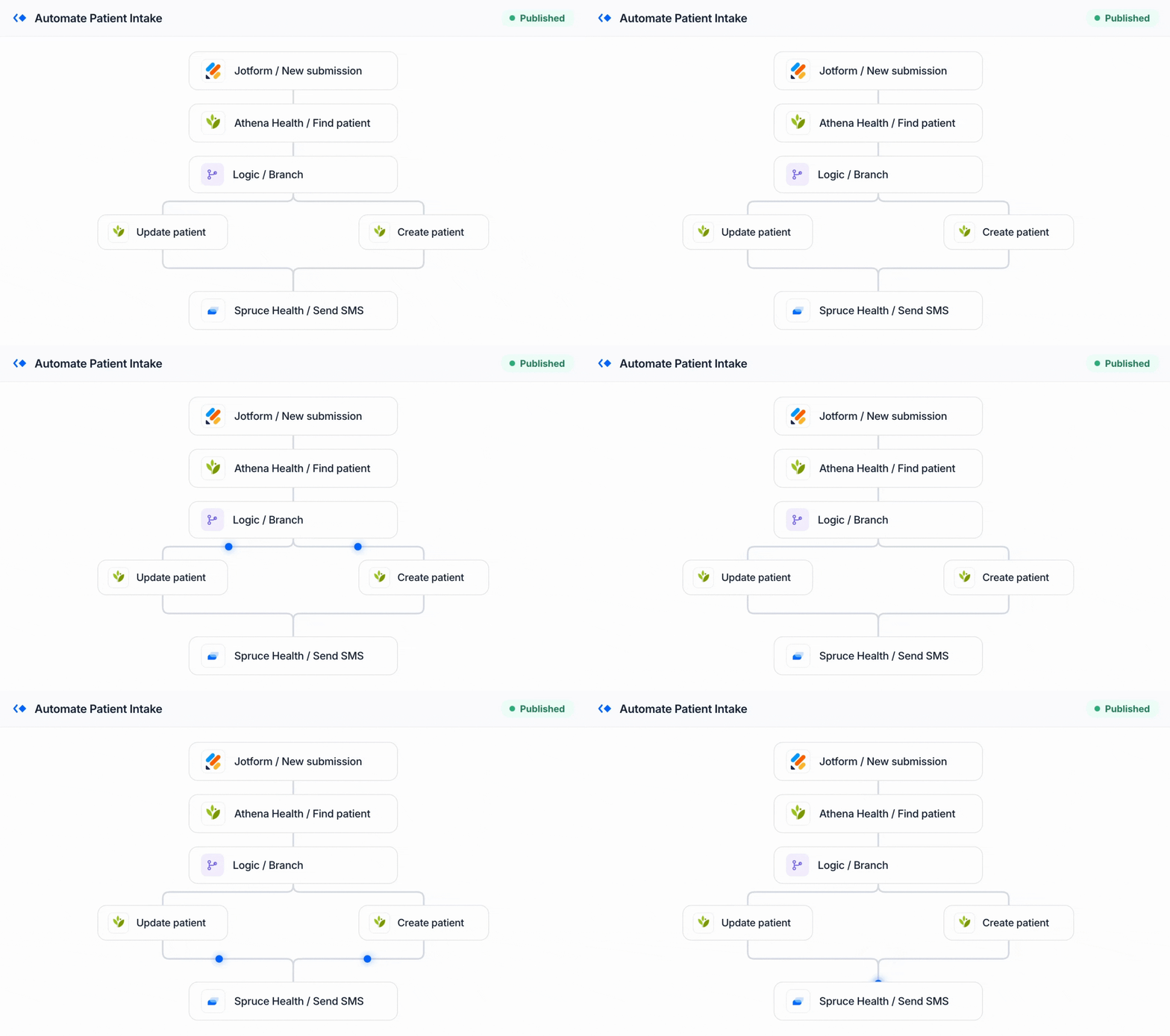
Automate patient intake
When a new patient books, send their intake forms, verify insurance, and create their record in my EHR before the first visit.
Send appointment reminders
Send each patient a personalized reminder by text, email, or voice before their visit, and confirm attendance back to my scheduler.
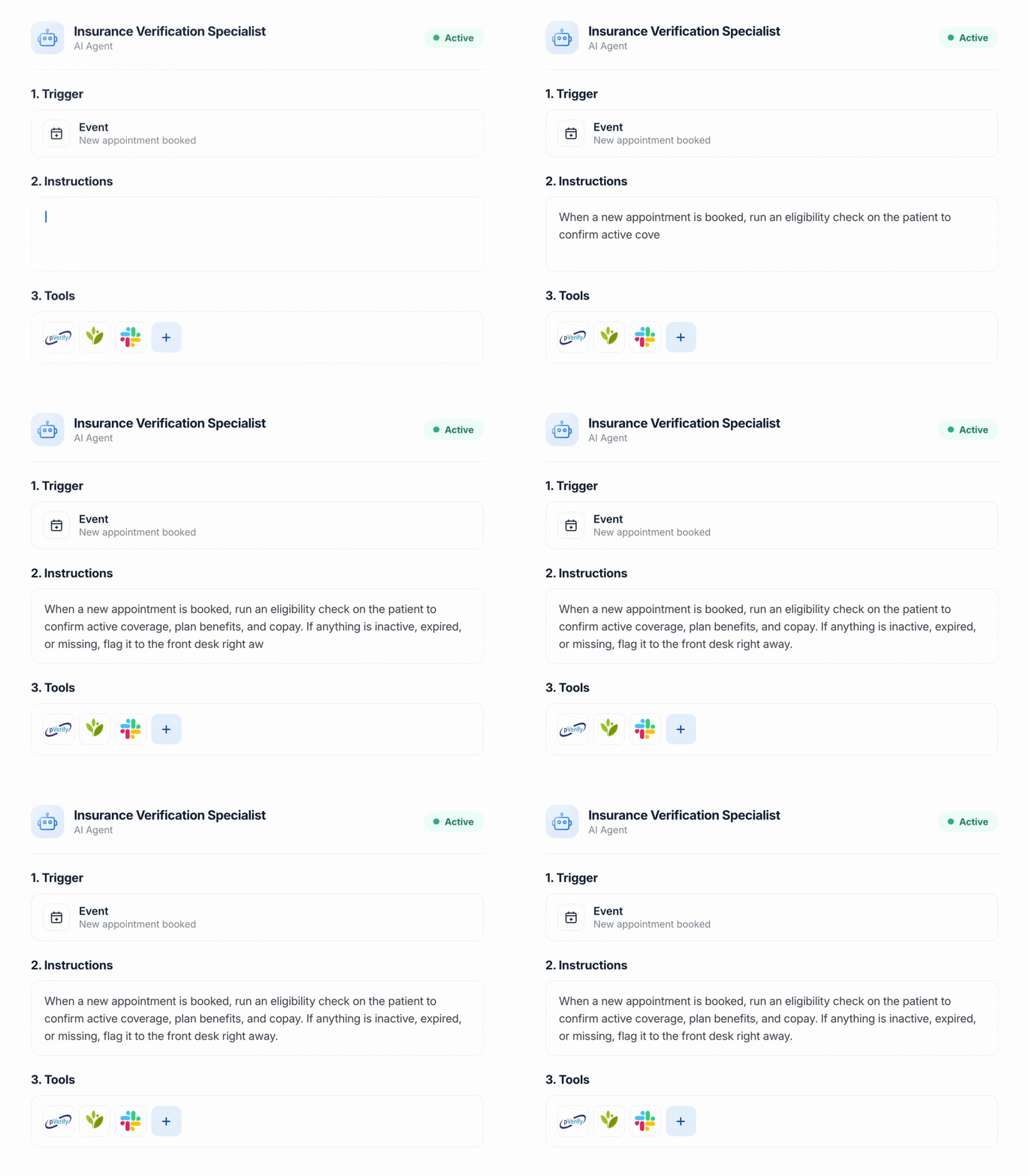
Verify insurance eligibility
Before every scheduled visit, verify the patient's coverage, benefits, and copay, and flag anyone whose insurance is inactive.
Recover no-shows
When a patient misses a visit, reach out to reschedule, find an open slot on my calendar, and rebook them automatically.
Prep for upcoming visits
Before each appointment, summarize the patient's intake answers, recent notes, medications, and labs into a brief for the care team.
See More
.png)
.png)
Trusted by 1,000+ Healthcare Companies






Keragon in numbers
Hundreds of healthcare teams are already giving hours back to their care teams.
20M+
Workflows executed, 50k automations run every day
100+
Years of manual work, given back to patient care
400+
Native integrations, with 3,500+ actions & triggers
How it works
Your front office, running on autopilot 24x7.
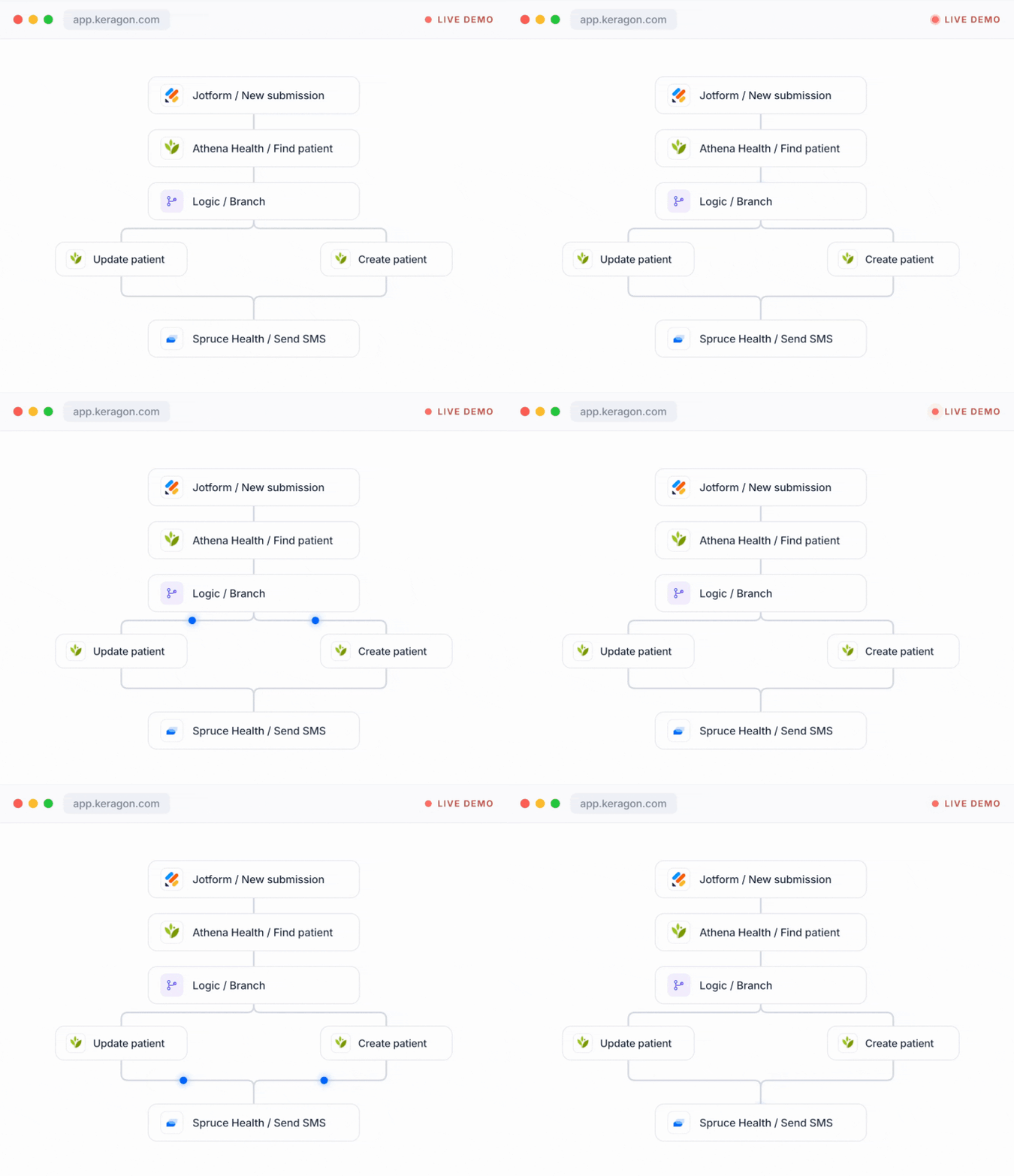
Describe what you want done and Keragon handles it end to end in minutes, not weeks. It connects your EHR and the rest of your stack, keeping your team moving even after hours, all HIPAA-compliant.
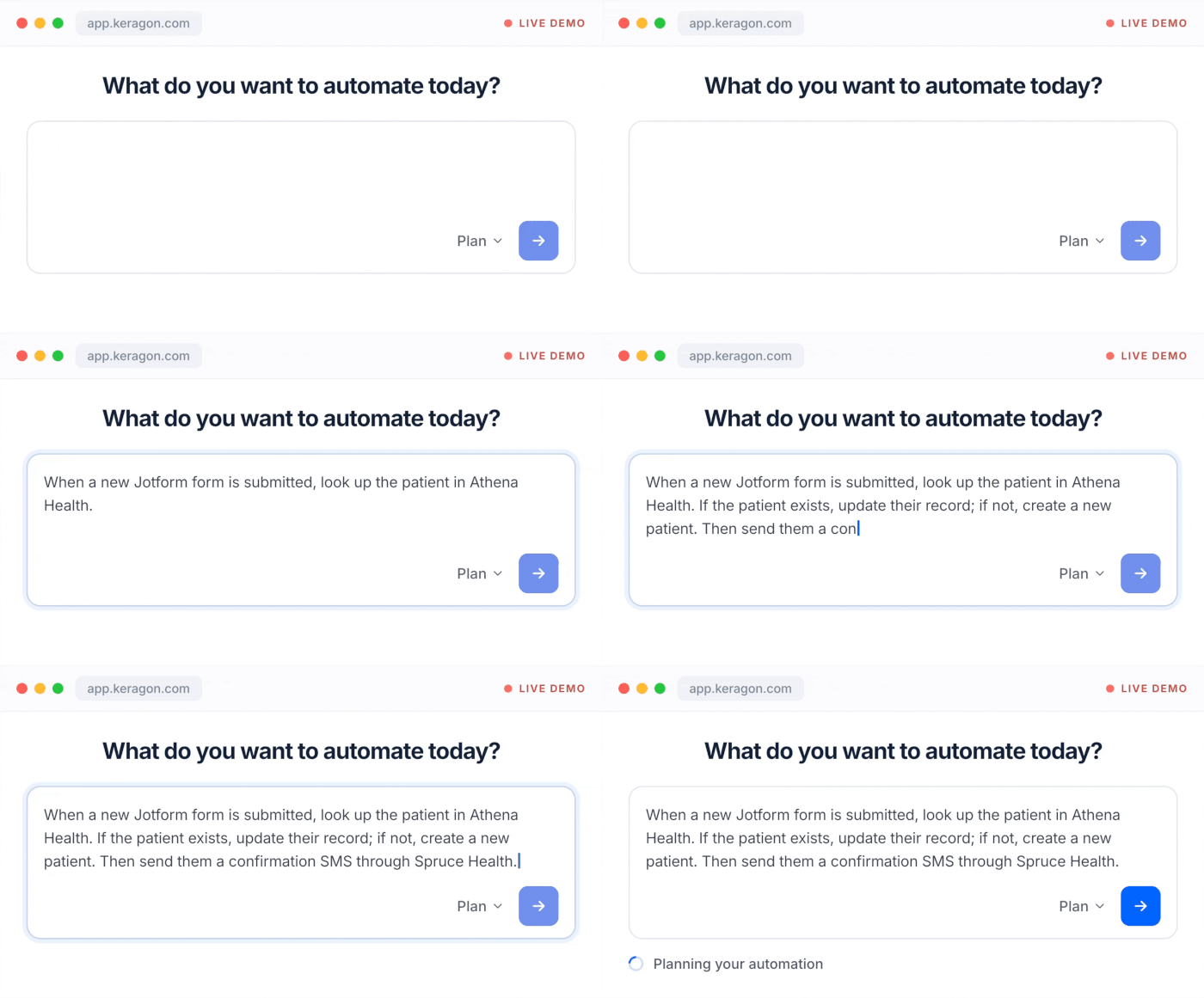
Step 1 · Describe what you need
Tell Keragon what you want, in plain English.
Type it like you would say it to a teammate.
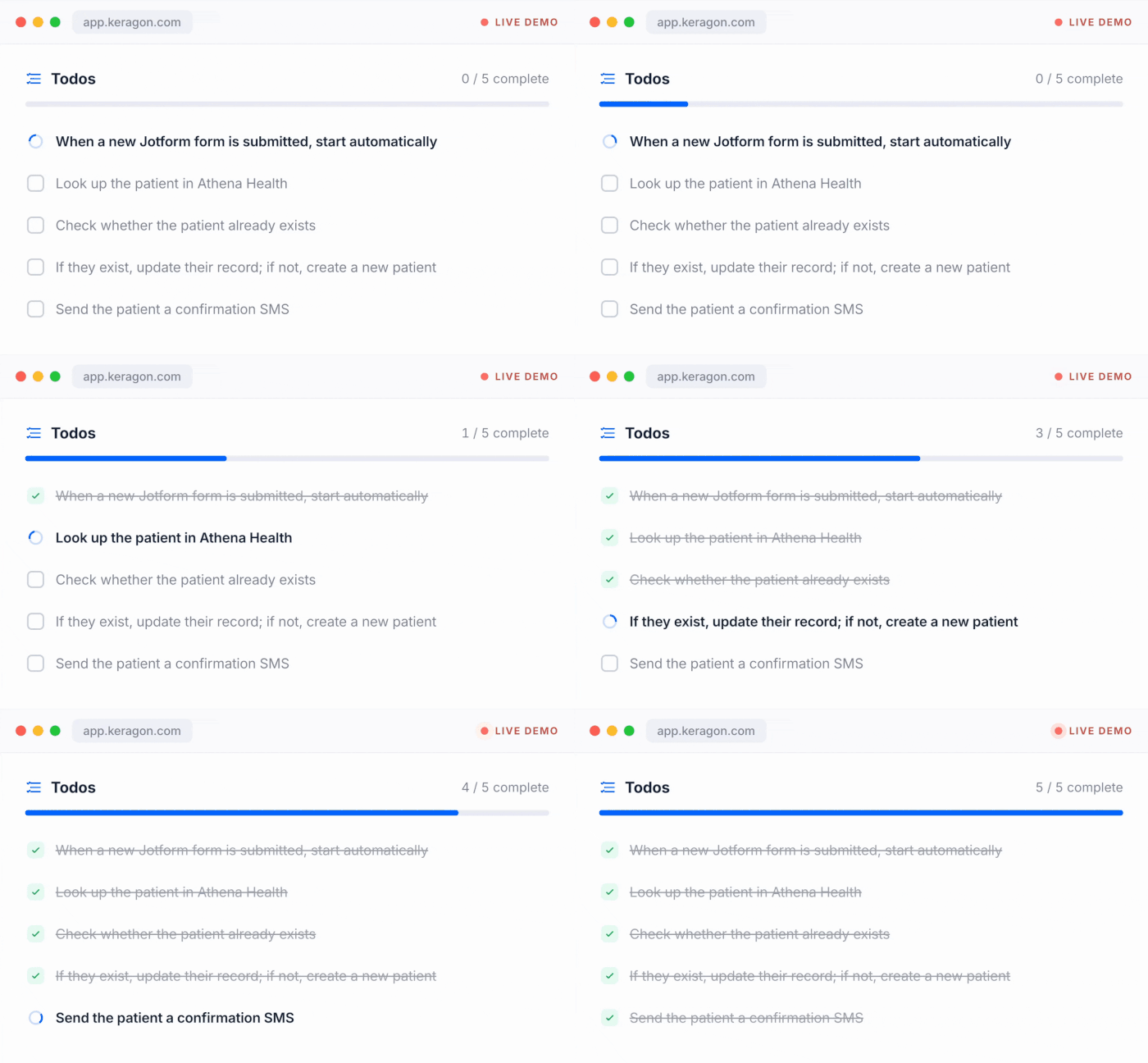
Step 2 · Keragon gets to work
It works like a teammate, not a builder.
Keragon reads your schedule, writes each message, and reaches out across your tools. No setup.
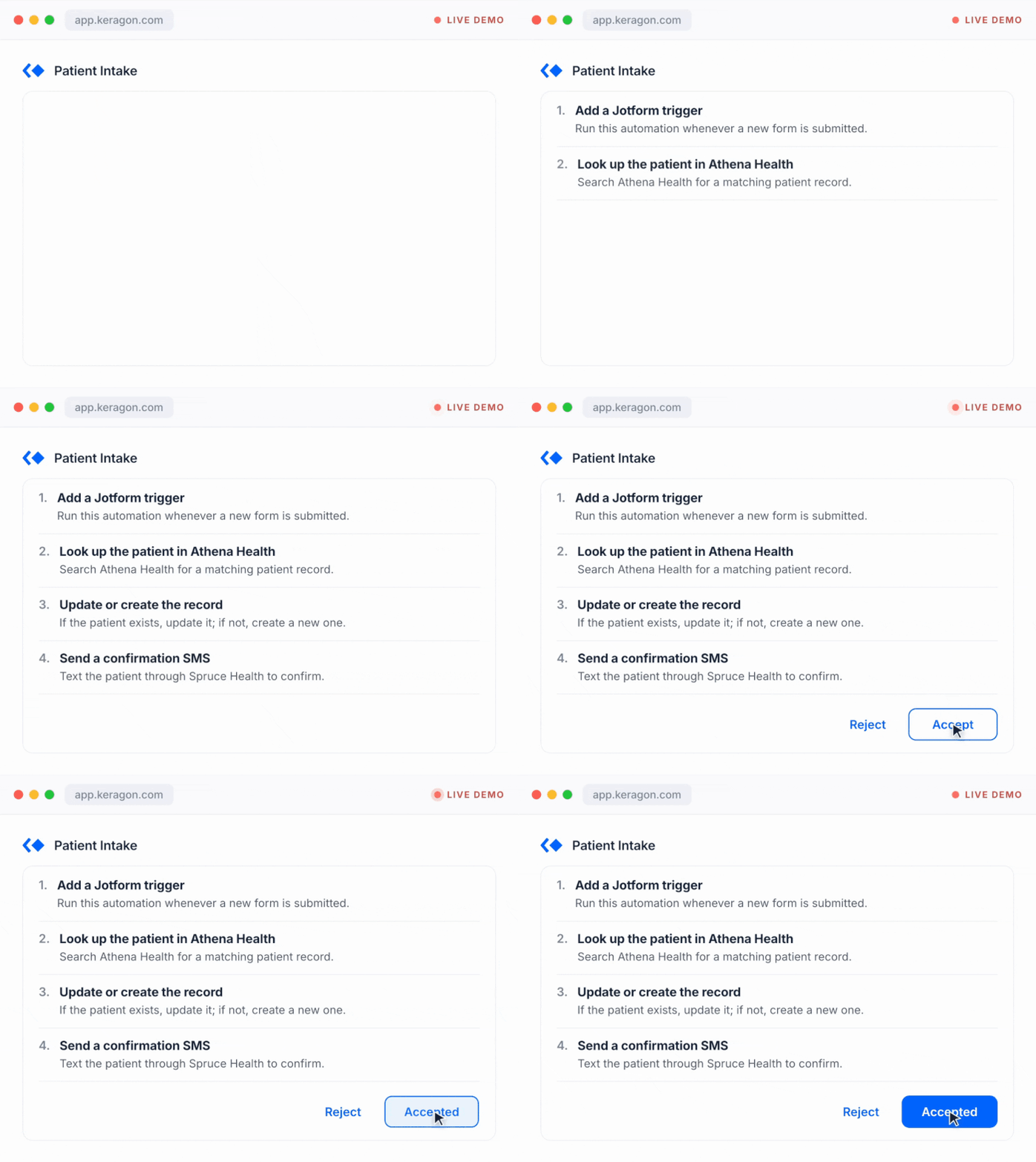
Step 3 · Review & approve
You stay in control.
Approve, edit, or add a human checkpoint wherever judgment matters.
Step 4 · It keeps running
On autopilot, around the clock.
Every action is logged for HIPAA audit. Adjust anytime, in plain English.
Integrations
Connect your EHR, and everything around it.
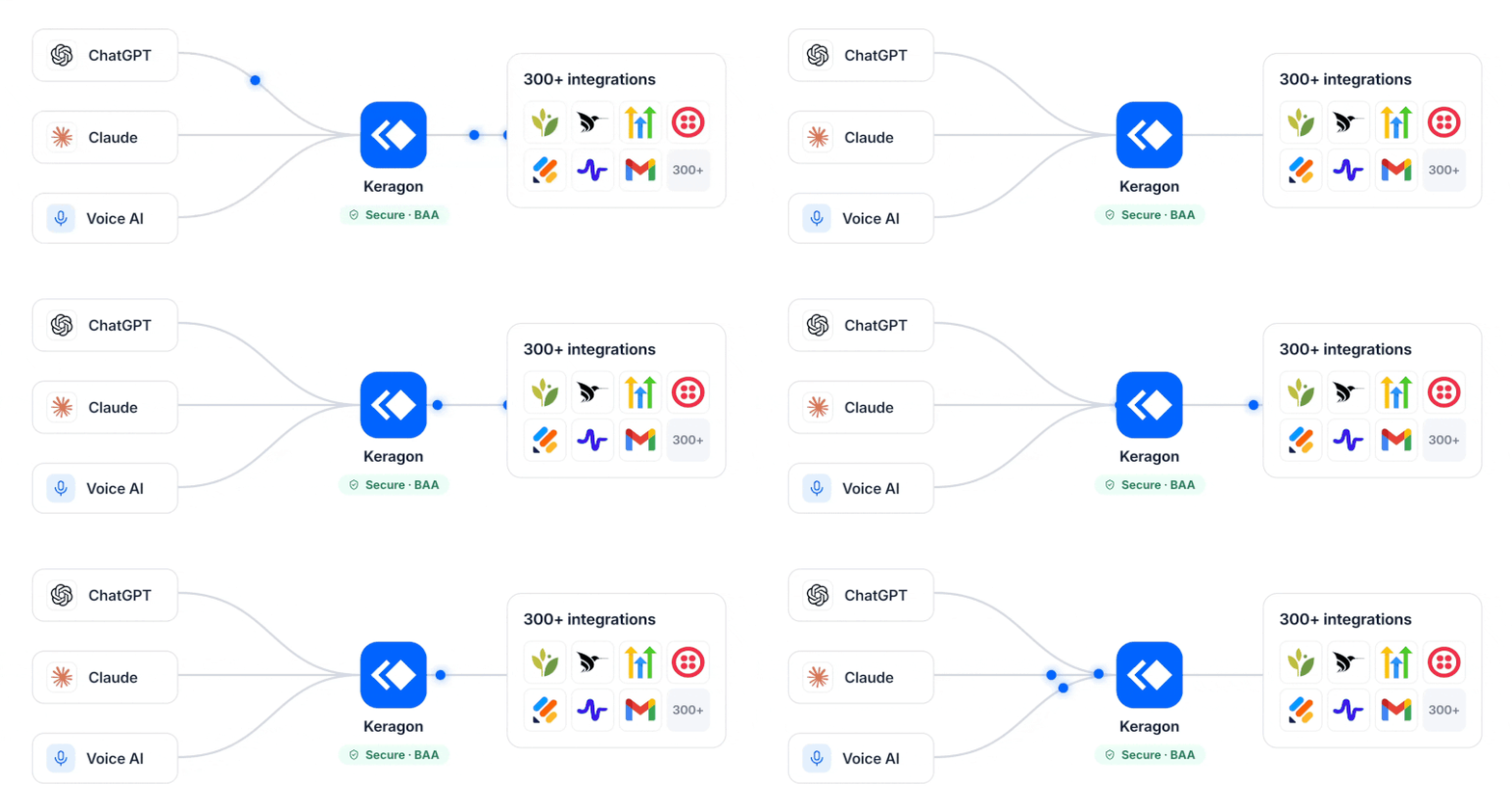
400+ HIPAA-compliant integrations across 30+ EHRs, scheduling, billing, and communications. If there’s an API in healthcare, we can connect it.
30+ EHRs · Deep coverage
Most popular tools · Scheduling, Billing & Communication
Explore the platform
Everything your team needs to automate, under one roof.
Templates
Discover what you can automate across your team.
Start from a ready-made, HIPAA-compliant template and make it yours in minutes.



Reduce no-shows
SMS appointment reminders
Text patients before visits and confirm attendance.
Turn leads into patients
Lead to patient records
Turn new HubSpot leads into Healthie patients.

Patient intake
Intake forms to your EHR
Sync every Jotform submission into Healthie.


Patient communication
New-patient alerts
Notify your team in Slack on new patients.

Sync appointment data
Bookings to the chart
Sync Acuity bookings straight into Healthie.

Patient follow-ups
Automated visit follow-ups
Email patients after each DrChrono visit.
EHR sync
Keep your EHRs in sync
Mirror patient updates across systems.
Billing
Invoices synced to your CRM
Sync paid Healthie invoices to Salesforce.
By specialty
Built for how your specialty runs
The same automations, tuned to the systems and workflows of your field.




Security & compliance
HIPAA built-in, not bolted on.
Enterprise-grade security for one of the most regulated industries in the world. Every workflow, agent, and integration protects PHI by default.
HIPAA-compliant
Full compliance with the Health Insurance Portability and Accountability Act for all PHI.
SOC 2 Type II
Independently audited by Prescient Security, with continuous monitoring and verification via Vanta.
BAA on every paid plan
A Business Associate Agreement is included from the Starter tier, not an enterprise-only add-on.
BAA on every paid plan
All data encrypted at rest (AES-256) and in transit (TLS 1.2+). Zero plaintext PHI.
API-only integrations
Every integration uses official APIs. No RPA, no screen scraping, no EHR ToS violations.
99.9% uptime SLA
Enterprise-grade reliability with real-time status monitoring at status.keragon.com.
Built for the agentic era
Keragon AI and Agents run under the same BAA with zero data retention, so PHI stays protected even when AI does the work.
FAQ
Got questions?
Why should your business care about healthcare automation?
Healthcare automation allows organizations to streamline repetitive administrative work, reduce labor costs, and free staff to focus on patient care.
Manual processes like scheduling, billing, and record management are prone to inefficiencies that can slow down operations and increase errors.
By implementing automation, your business can accelerate revenue cycles, enhance compliance, and create a more connected digital ecosystem.
For healthcare providers, automation also reduces burnout by removing tedious data entry, letting teams concentrate on delivering better care.
Manual processes like scheduling, billing, and record management are prone to inefficiencies that can slow down operations and increase errors.
By implementing automation, your business can accelerate revenue cycles, enhance compliance, and create a more connected digital ecosystem.
For healthcare providers, automation also reduces burnout by removing tedious data entry, letting teams concentrate on delivering better care.
How does automation reduce manual errors in billing, scheduling, and data entry?
Automation standardizes data handling by creating rule-based workflows that move information between systems without manual input.
In billing, automated logic checks for missing codes or incorrect payer details before claims are submitted.
In scheduling, automation eliminates double-booking and triggers timely confirmations and reminders.
For data entry, it synchronizes records directly between EHRs, CRMs, and billing tools, cutting down on typos or duplication.
With every process running smoothly, human error is almost eliminated.
In billing, automated logic checks for missing codes or incorrect payer details before claims are submitted.
In scheduling, automation eliminates double-booking and triggers timely confirmations and reminders.
For data entry, it synchronizes records directly between EHRs, CRMs, and billing tools, cutting down on typos or duplication.
With every process running smoothly, human error is almost eliminated.
How can healthcare automation improve patient experience?
Patients feel the impact of automation through better communication, reduced waiting times, and smoother interactions.
Automated appointment reminders and digital intake forms ensure visits run on schedule.
Post-visit workflows trigger follow-up messages, surveys, and care plan reminders without staff intervention.
This consistency builds patient trust and engagement, resulting in higher satisfaction scores and improved retention.
Automation also ensures that sensitive data is handled securely, providing peace of mind alongside convenience.
Automated appointment reminders and digital intake forms ensure visits run on schedule.
Post-visit workflows trigger follow-up messages, surveys, and care plan reminders without staff intervention.
This consistency builds patient trust and engagement, resulting in higher satisfaction scores and improved retention.
Automation also ensures that sensitive data is handled securely, providing peace of mind alongside convenience.
How does Keragon benefit various healthcare organizations from big hospitals to small businesses?
Keragon was built to serve healthcare teams of all sizes.
Small clinics and solo practices gain access to powerful automation without complex IT infrastructure or coding knowledge.
Mid-sized groups can scale their workflows to manage multiple locations and departments efficiently.
Large hospitals and enterprise systems benefit from Keragon’s HIPAA-compliant environment, robust APIs, and advanced workflow orchestration.
Every tier gains faster operations, reduced errors, and stronger data integrity tailored to its scale.
Small clinics and solo practices gain access to powerful automation without complex IT infrastructure or coding knowledge.
Mid-sized groups can scale their workflows to manage multiple locations and departments efficiently.
Large hospitals and enterprise systems benefit from Keragon’s HIPAA-compliant environment, robust APIs, and advanced workflow orchestration.
Every tier gains faster operations, reduced errors, and stronger data integrity tailored to its scale.
What kind of customer support is included?
Keragon provides multiple support tiers based on plan level.
All users receive access to detailed documentation, step-by-step tutorials, and community resources.
Higher-tier plans include email or live support, while enterprise customers benefit from dedicated account managers and workflow engineers.
Response times and service levels are covered under defined SLAs to ensure minimal downtime and smooth onboarding.
All users receive access to detailed documentation, step-by-step tutorials, and community resources.
Higher-tier plans include email or live support, while enterprise customers benefit from dedicated account managers and workflow engineers.
Response times and service levels are covered under defined SLAs to ensure minimal downtime and smooth onboarding.
How does Keragon’s pricing work?
Keragon offers transparent, usage-based pricing structured around workflow runs and active workflows (more details here).
Each plan scales to match organizational size and automation volume, from startup-level to enterprise-grade use.
Keragon provides flexible monthly or annual billing, and all paid plans include HIPAA compliance and business associate agreements (BAAs).
This approach ensures predictable costs without surprise fees as usage grows.
Each plan scales to match organizational size and automation volume, from startup-level to enterprise-grade use.
Keragon provides flexible monthly or annual billing, and all paid plans include HIPAA compliance and business associate agreements (BAAs).
This approach ensures predictable costs without surprise fees as usage grows.
Is Keragon’s healthcare automation platform secure and HIPAA-compliant?
Security is central to Keragon’s design.
Keragon adheres to HIPAA standards, provides signed BAAs on paid plans, and follows SOC 2 Type 2 best practices.
Data is encrypted in transit and at rest, user access is role-based, and activity logs ensure traceability for audits.
Keragon also supports single sign-on (SSO) and performs regular penetration testing to maintain compliance and trust.
Keragon adheres to HIPAA standards, provides signed BAAs on paid plans, and follows SOC 2 Type 2 best practices.
Data is encrypted in transit and at rest, user access is role-based, and activity logs ensure traceability for audits.
Keragon also supports single sign-on (SSO) and performs regular penetration testing to maintain compliance and trust.
How long does it take to implement Keragon’s platform?
Most organizations can launch their first workflow within an hour.
Keragon’s no-code builder, pre-configured templates, and guided setup reduce onboarding time significantly.
More complex, multi-departmental automations can take several days to plan, test, and deploy.
Timelines vary by system complexity and integrations, but most teams see measurable ROI within the first month.
Keragon’s no-code builder, pre-configured templates, and guided setup reduce onboarding time significantly.
More complex, multi-departmental automations can take several days to plan, test, and deploy.
Timelines vary by system complexity and integrations, but most teams see measurable ROI within the first month.
What challenges may arise during implementation?
The most common challenges involve mapping data correctly across systems, defining workflow logic, and aligning automation goals with existing operations.
Legacy software or incomplete API access can add setup time.
However, Keragon’s support team and onboarding engineers help configure integrations, troubleshoot issues, and ensure proper testing before workflows go live.
Once set up, maintenance requires minimal effort.
Legacy software or incomplete API access can add setup time.
However, Keragon’s support team and onboarding engineers help configure integrations, troubleshoot issues, and ensure proper testing before workflows go live.
Once set up, maintenance requires minimal effort.
Is Keragon’s healthcare automation software scalable?
Keragon is designed for growth.
Whether automating ten or ten thousand workflows, the system maintains stability and compliance.
Scalable infrastructure, role-based permissions, and enterprise-grade integrations make it suitable for organizations expanding their operations or adding new departments.
As workflow volume increases, higher-tier plans accommodate the additional load with no loss in performance.
Whether automating ten or ten thousand workflows, the system maintains stability and compliance.
Scalable infrastructure, role-based permissions, and enterprise-grade integrations make it suitable for organizations expanding their operations or adding new departments.
As workflow volume increases, higher-tier plans accommodate the additional load with no loss in performance.
What's the difference between Workflows, Agents, and MCP?
Workflows are deterministic, no-code automations. The same steps run the same way every time, ideal for scheduling, intake, billing, and record sync.
Agents are AI teammates that handle judgment-based work like patient intake, reminders, and no-show recovery.
MCP lets you connect your own AI agents to Keragon's 400+ healthcare integrations through a secure layer.All three run on the same HIPAA-compliant platform.
Agents are AI teammates that handle judgment-based work like patient intake, reminders, and no-show recovery.
MCP lets you connect your own AI agents to Keragon's 400+ healthcare integrations through a secure layer.All three run on the same HIPAA-compliant platform.
Are Keragon Agents HIPAA-compliant?
Yes. Agents run under the same Business Associate Agreement (BAA) as the rest of the platform, with zero data retention, so PHI stays protected even when AI does the work.
Agents are currently in early access.
Agents are currently in early access.
What is Keragon MCP, and how do I use it?
MCP is a secure layer that connects your own AI agents and assistants to Keragon's 400+ healthcare integrations. If you are building with AI, you can give it HIPAA-compliant access to the tools your practice already uses.
MCP is currently in beta.
MCP is currently in beta.
Can Keragon’s platform be customized for specific healthcare workflows?
Yes. Keragon’s no-code interface allows users to build workflows that mirror their exact operational processes.
Custom logic branches, conditional triggers, and integrated APIs ensure the platform fits any practice model from telehealth to urgent care.
Whether automating intake, referral management, or claims submission, users can create workflows unique to their setting without writing code.
Teams can also adapt existing templates to fit compliance, specialty, or regional documentation requirements.
Custom logic branches, conditional triggers, and integrated APIs ensure the platform fits any practice model from telehealth to urgent care.
Whether automating intake, referral management, or claims submission, users can create workflows unique to their setting without writing code.
Teams can also adapt existing templates to fit compliance, specialty, or regional documentation requirements.
What integrations does Keragon support?
Keragon connects to more than 400+ healthcare and business integrations.
This includes EHRs like Athenahealth, Elation, and Healthie; communication tools such as Twilio and Slack; and productivity apps like Google Workspace, Salesforce, and HubSpot.
Our REST API and webhook support allow for integrations with legacy and custom-built systems, ensuring seamless interoperability between old and new technologies.
This includes EHRs like Athenahealth, Elation, and Healthie; communication tools such as Twilio and Slack; and productivity apps like Google Workspace, Salesforce, and HubSpot.
Our REST API and webhook support allow for integrations with legacy and custom-built systems, ensuring seamless interoperability between old and new technologies.
Do Keragon’s solutions support AI, chatbots, and RPA for repetitive tasks?
Yes. Keragon integrates with AI models, chatbot frameworks, and robotic process automation (RPA) tools to handle repetitive or logic-based tasks.
This includes automated intake, AI-driven responses, and data classification for administrative processes.
These features help healthcare teams scale communication, reduce manual workload, and provide faster service without sacrificing accuracy or compliance.
This includes automated intake, AI-driven responses, and data classification for administrative processes.
These features help healthcare teams scale communication, reduce manual workload, and provide faster service without sacrificing accuracy or compliance.
How does automation integrate with existing EHR and legacy systems?
Keragon’s prebuilt connectors and API architecture make it easy to link modern automation with older systems.
Webhooks and HTTP actions allow seamless communication between legacy databases, EHRs, and cloud applications.
Data flows in both directions, ensuring records stay synchronized across platforms.
This flexibility modernizes the tech stack without disrupting existing workflows.
Webhooks and HTTP actions allow seamless communication between legacy databases, EHRs, and cloud applications.
Data flows in both directions, ensuring records stay synchronized across platforms.
This flexibility modernizes the tech stack without disrupting existing workflows.