AI in Healthcare
13 mins
12 Best AI Tools in Healthcare (2026)
Summary
Your Competitors Are Embracing AI – Are You Falling Behind?
First-generation healthcare AI tools analyzed scans. The tools redefining healthcare in 2026 orchestrate entire workflows: connecting diagnostic findings to treatment plans, syncing patient data across fragmented systems, and automating the administrative burden.
Most healthcare organizations searching for AI tools have already learned the hard way that point solutions create more integration work than they eliminate. A radiology AI that flags a finding but cannot notify the care team, update the EHR, or trigger a follow-up workflow solves only half the problem.
The tools in this guide were evaluated on their ability to deliver measurable outcomes in production healthcare environments, not demos. We assessed 12 platforms across clinical validation, HIPAA compliance, integration depth, deployment flexibility, and total cost of ownership. For pharma and biotech organizations, AI solutions for Pharma extend this further automating regulatory submissions, drug development workflows, and clinical data operations at the enterprise level.
| Platform | Best For |
|---|---|
| Keragon | Workflow Automation |
| Aidoc | Radiology Triage |
| Tempus | Precision Medicine |
| Abridge | Clinical Documentation |
| Wysa | Mental Health |
Best AI Tools in Healthcare: Quick Comparison Table
| Tool | Best For | Channels | HIPAA | FDA | Pricing | G2 | Score | Category |
|---|---|---|---|---|---|---|---|---|
| Keragon | Workflow automation | API, no-code | Yes + SOC2 | N/A | From $99/mo | 4.8/5 | 9.2/10 | Automation |
| Aidoc | Radiology triage | PACS, EHR | Yes | 50+ cleared | Enterprise | N/A | 9.0/10 | Diagnostics |
| Tempus | Precision medicine | EHR, portal | Yes | N/A | Enterprise | N/A | 8.8/10 | Precision Med |
| Abridge | AI scribe | Ambient, EHR | Yes | N/A | Enterprise | 4.8/5 | 8.6/10 | Documentation |
| PathAI | Pathology AI | LIS, lab | Yes | Cleared | Enterprise | N/A | 8.4/10 | Diagnostics |
| Viz.ai | Stroke detection | Mobile, PACS | Yes | Cleared | Enterprise | N/A | 8.4/10 | Care Coord |
| Butterfly iQ | Portable imaging | Mobile | Yes | Cleared | From ~$2K | 4.3/5 | 8.0/10 | Imaging |
| Caption Health | Cardiac imaging | Ultrasound | Yes | Cleared | Enterprise | N/A | 7.8/10 | Imaging |
| Wysa | Mental health | App, web | Yes | BTD* | Free + Ent. | 4.7/5 | 7.8/10 | Mental Health |
| AKASA | Revenue cycle | RCM systems | Yes | N/A | Enterprise | 4.5/5 | 7.6/10 | RCM |
| IBM Watson | Clinical DCS | EHR, portal | Yes | N/A | Enterprise | 3.8/5 | 7.2/10 | Decision Spt |
| DeepMind | Ophthalmology | Research | Research | N/A | N/A | N/A | 7.0/10 | Research |
Our Scoring Methodology
| Criterion | Weight | What We Measured |
|---|---|---|
| Clinical / Operational Impact | 25% | Measurable outcome improvement. Workflow efficiency gains. Error reduction. Patient outcome data from production deployments. |
| Validation & Regulatory Status | 20% | FDA clearance or breakthrough designation. Peer-reviewed clinical studies. Documented customer outcomes at scale. Not just demos. |
| Integration Depth | 20% | Native EHR connectivity. Billing and scheduling integration. API extensibility. Mid-workflow failure handling. Number of pre-built connectors. |
| HIPAA Compliance & Security | 15% | HIPAA certification. SOC 2 Type II. BAA availability. Data encryption. Audit trails. Data residency controls. |
| Pricing & TCO | 10% | Billing model transparency. Implementation costs. Scaling economics. Hidden costs. Switching cost. |
| Reviews, Support & Docs | 10% | G2/Capterra ratings. Support tiers. Onboarding quality. Documentation depth. Community or knowledge base. |
Top 12 Best AI Tools in Healthcare in 2026
#1. Keragon: Best AI Tool for Healthcare Workflow Automation
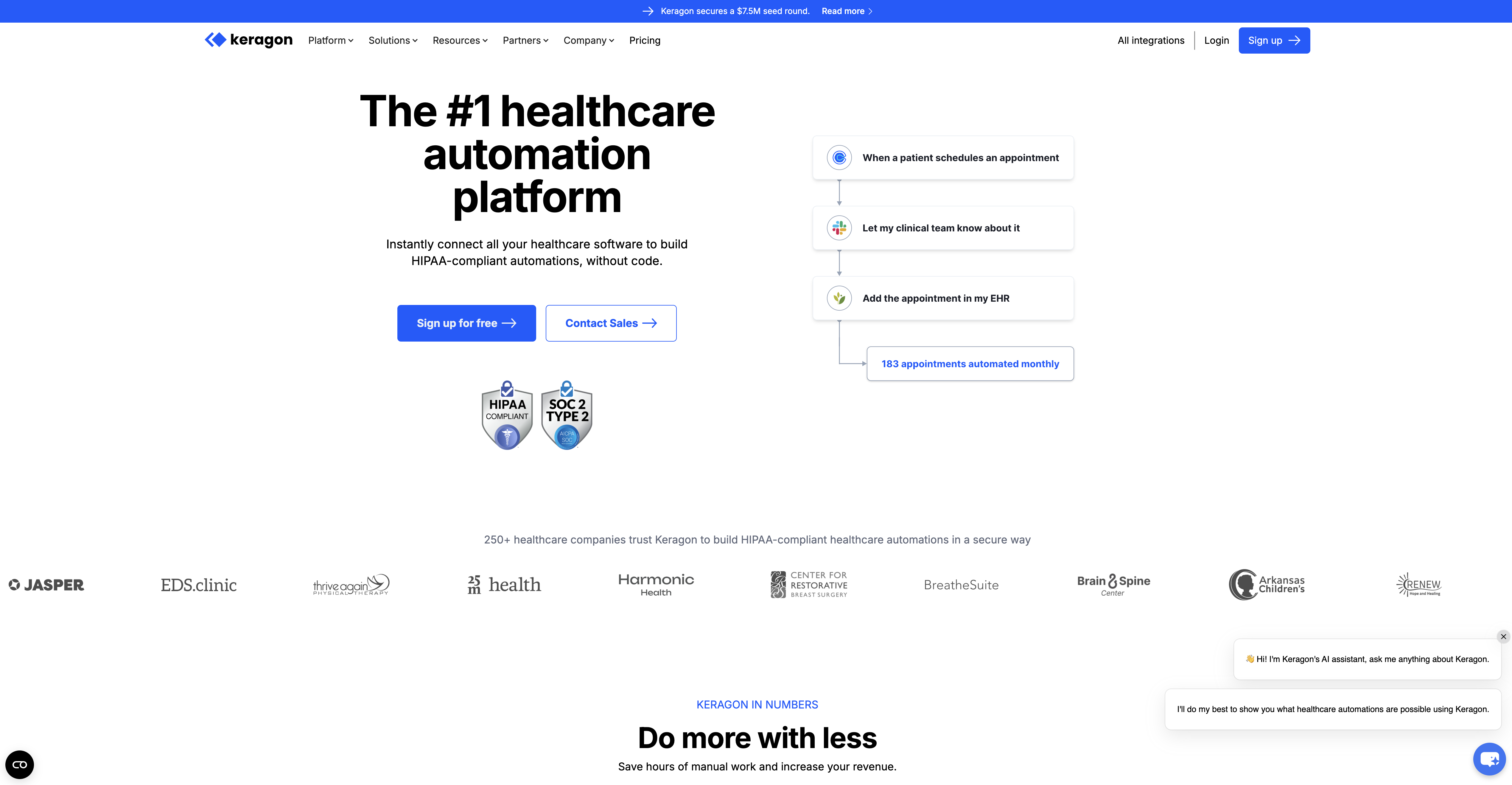
Score: 9.2/10. Highest marks for integration depth (10/10), HIPAA compliance (10/10), and operational impact (9/10). Scored lower on clinical AI capability (N/A - automation platform, not diagnostic tool) and review volume (7/10).
Keragon is the HIPAA-compliant, no-code automation platform purpose-built for healthcare. Where most AI tools on this list solve one clinical or administrative problem, Keragon connects them all: syncing EHRs with billing systems, routing chatbot interactions to scheduling workflows, and automating the data handoffs that consume hours of staff time daily.
Best for healthcare organizations with 2+ disconnected systems (EHR, billing, scheduling, communication) that need to automate cross-system workflows without custom engineering or HIPAA risk.
Product Overview
Pain 1: Patient data is trapped in disconnected systems.
Healthcare organizations run an average of 10-15 software systems that do not natively communicate. Patient data entered in an intake form does not automatically flow to the EHR, the scheduling system, or the billing platform. Staff manually re-enter data across systems, creating errors, delays, and compliance risk. Keragon solves this with 400+ pre-built healthcare integrations and a no-code workflow builder that connects tools like Athenahealth, DrChrono, Elation Health, Healthie, ModMed, Salesforce, Slack, and GoHighLevel into unified workflows.
Pain 2: Generic automation tools create HIPAA compliance risk.
Zapier, Make, and n8n are not built for healthcare. They lack BAAs, healthcare-specific connectors, and the compliance infrastructure required for handling PHI. Keragon is built from the ground up for healthcare with SOC 2 Type II certification, HIPAA compliance, encryption, audit logging, and a 7-day data retention policy. Compliance is architectural, not an add-on.
Pain 3: Custom integrations take months and cost tens of thousands.
Building point-to-point integrations between healthcare systems typically requires months of engineering time and ongoing maintenance. Keragon's drag-and-drop builder lets healthcare teams launch compliant automations in days. The platform's support team builds new API connectors in as little as one to two weeks on request.
Pricing
- Free 14-day trial. No credit card required.
- Paid plans from $99/month.
- Pricing based on workflow volume, not per-seat.
Integrations and Extensibility
- 400+ healthcare integrations: EHRs (Athenahealth, DrChrono, Elation, Healthie, ModMod), CRMs (Salesforce, GoHighLevel), communication (Slack, Microsoft Teams), billing, scheduling, and more.
- Pre-built workflow templates for patient intake, appointment reminders, referral management, and claims processing.
- New connectors built in 1-2 weeks on request.
- AI-powered automation for intelligent workflow routing.
Deployment and Setup
- Cloud-based. No infrastructure to manage.
- Automations deployable in days, not months.
- No engineering team required.
Tradeoffs
- Keragon is a workflow automation platform, not a clinical AI tool. It does not perform diagnostics, imaging analysis, or clinical decision support.
- Best paired with the clinical AI tools on this list (Aidoc, Tempus, PathAI) to connect their outputs to downstream workflows.
- Fewer general SaaS integrations than Zapier/Make, but deeper healthcare-specific coverage.
Support
- 24/7 responsive support.
- Dedicated onboarding for healthcare use cases.
- Documentation at help.keragon.com
Mini Case Study
The Autism Center of Illinois (40 employees, pediatric therapy) deployed Keragon to automate intake workflows connecting IntakeQ, Google Drive, Slack, and Monday.com. Result: 10 hours/week reclaimed from admin work, 2-3 days faster client onboarding, full HIPAA-compliant data handling.
Join hundreds of healthcare oranizations automating smarter. Start your 14-day Keragon trial now.
#2. Aidoc: Best AI Tool for Radiology Triage
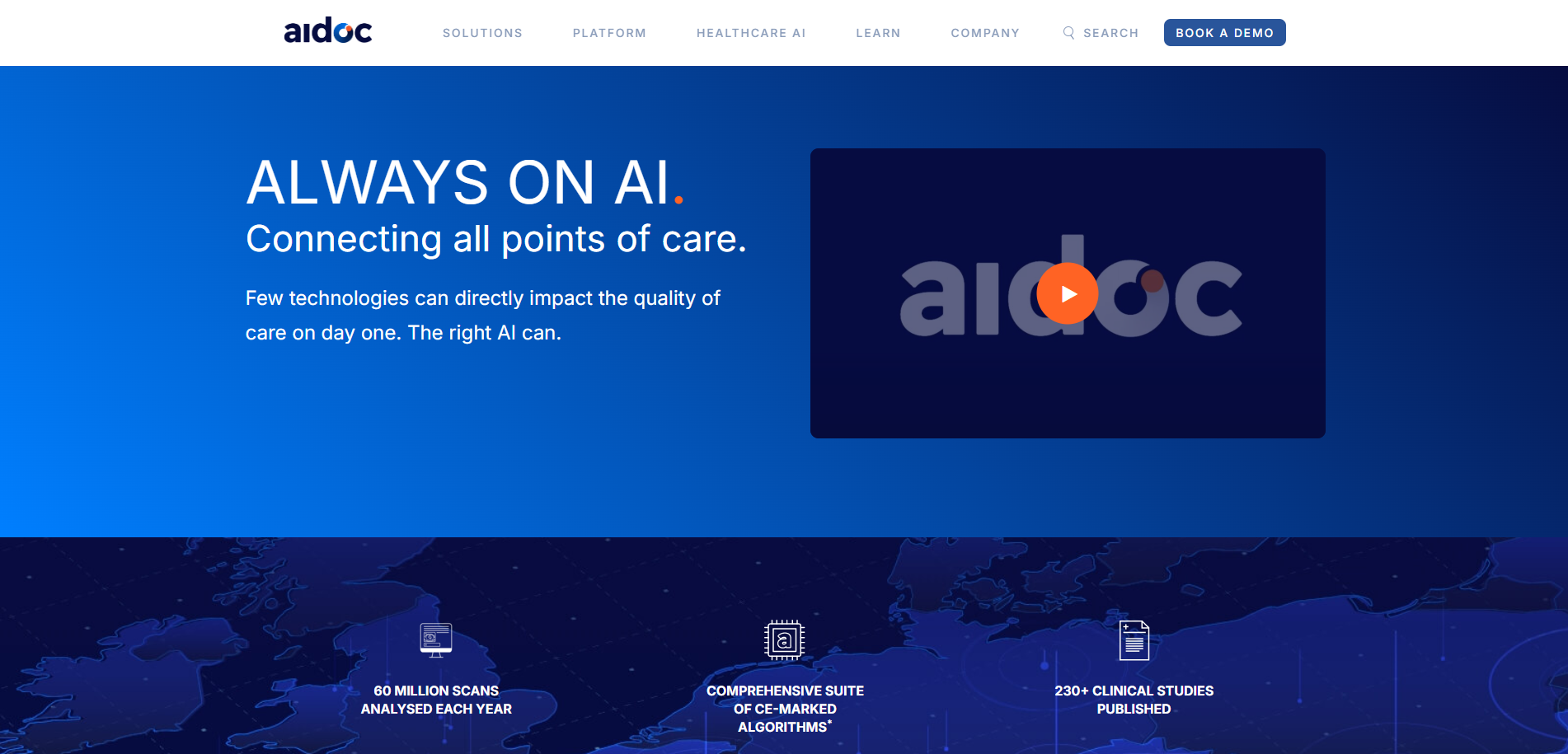
Score: 9.0/10. Highest marks for clinical validation (10/10) and operational impact (9/10). Scored lower on integration beyond imaging (5/10) and pricing transparency (4/10).
Aidoc is the leading AI radiology platform with 50+ FDA-cleared algorithms deployed across nearly 2,000 hospitals globally. It continuously scans CT, MRI, and X-ray images in real-time, detecting critical conditions including brain hemorrhages, pulmonary embolisms, strokes, and aortic emergencies. Flagged cases are pushed to the top of the radiologist's worklist with automated specialist notification.
Best for radiology departments and health systems with high imaging volumes needing real-time triage, prioritization, and care coordination for critical findings.
Key Differentiators
- 50+ FDA-cleared algorithms across multiple imaging modalities and conditions.
- Real-time worklist prioritization: critical cases surfaced automatically.
- Care coordination: automated specialist notification when critical findings are detected.
- Deployed in nearly 2,000 hospitals globally.
Pricing
Enterprise pricing. Contact Aidoc.
Tradeoffs
- Primarily focused on acute/critical conditions. Less suited for routine screening workflows.
- Enterprise-only pricing with no self-service tier.
- Strongest in radiology; does not cover pathology, documentation, or administrative workflows.
#3. Tempus: Best AI Tool for Precision Medicine
Score: 8.8/10. Highest marks for clinical impact (10/10) and scale (9/10). Scored lower on accessibility for smaller organizations (5/10).
Tempus combines genomic sequencing, clinical data, and AI to guide personalized cancer treatment. Connected to ~65% of U.S. academic medical centers and 50%+ of oncologists. In 2025, Tempus acquired Paige (digital pathology AI leader) and launched David, a generative AI clinical co-pilot integrated into EHR workflows.
Best for oncologists and cancer centers needing precision medicine insights, clinical trial matching, and AI-powered treatment planning.
Key Differentiators
- Genomic profiling + AI treatment matching across oncology and expanding specialties.
- Connected to 65% of U.S. academic medical centers.
- Clinical trial matching connecting patients to relevant studies.
- David: generative AI co-pilot integrated into EHR workflows.
Pricing
Enterprise pricing. Contact Tempus.
Tradeoffs
- Primarily oncology-focused (though expanding to neurology, cardiology).
- Genomic testing costs can be significant for smaller organizations.
- Enterprise complexity; not a quick-deploy tool.
#4. Abridge: Best AI Tool for Clinical Documentation
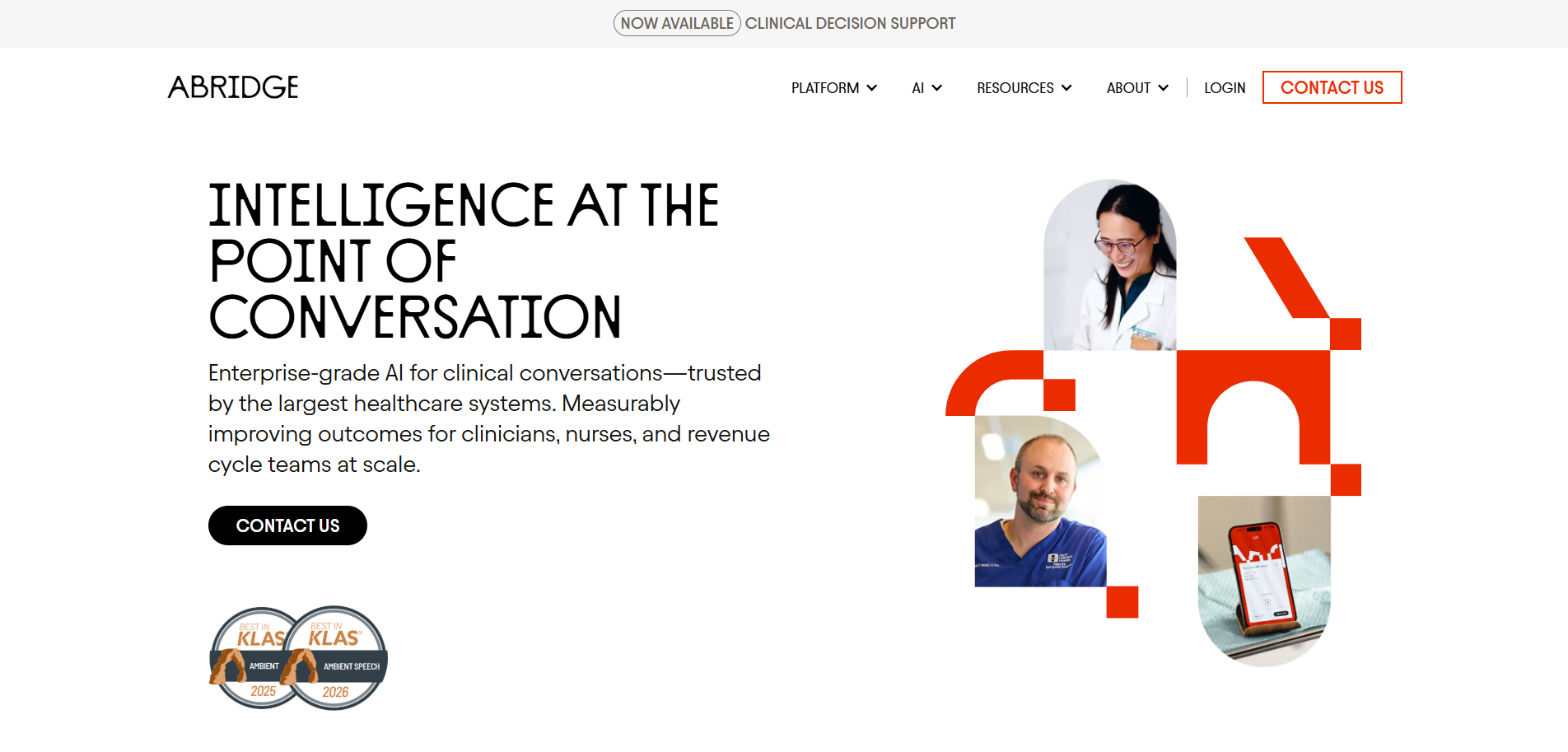
Score: 8.6/10. Highest marks for operational impact (9/10) and physician adoption (9/10). Scored lower on pricing transparency (5/10).
Abridge uses ambient AI to transform doctor-patient conversations into structured clinical notes in real-time. The system listens to the encounter, identifies medically relevant information, and generates documentation that integrates directly into the EHR. This addresses the documentation crisis: physicians spend roughly two hours on admin for every hour of direct patient care.
Best for health systems and practices seeking to reduce physician documentation burden, reclaim clinical time, and combat burnout.
Key Differentiators
- Ambient AI scribing: listens to encounters and generates structured notes.
- Direct EHR integration for seamless documentation workflow.
- Learns individual physician documentation preferences over time.
- Summarizes diagnoses, treatment plans, and medication instructions.
Pricing
Enterprise pricing. Contact Abridge.
Tradeoffs
- Requires microphone hardware in exam rooms.
- Documentation quality depends on audio clarity and encounter structure.
- Enterprise pricing; not accessible for solo practitioners.
#5. PathAI: Best AI Tool for Pathology Diagnostics
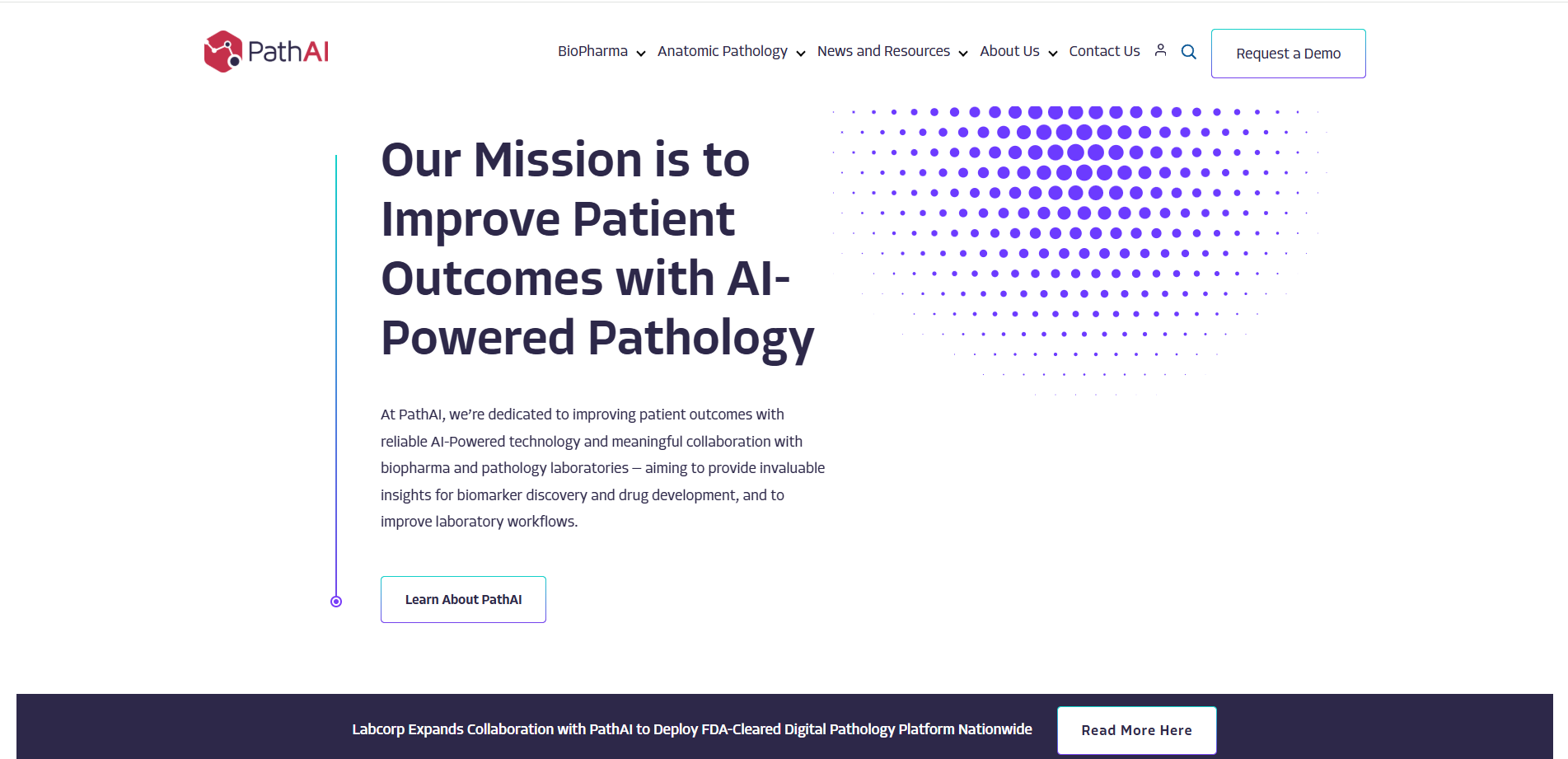
Score: 8.4/10. Strong clinical validation (9/10). Lower on integration breadth (6/10).
PathAI uses deep learning to analyze pathology slides with high precision for cancer detection. FDA-cleared and deployed at national scale through Labcorp. Provides objective biomarker quantification and content-based image retrieval for complex cases.
Best for pathology labs and cancer centers needing AI-assisted diagnostic accuracy.
Tradeoffs
- Focused on anatomic pathology only. Requires digital pathology infrastructure. Enterprise-only.
#6. Viz.ai: Best AI Tool for Time-Critical Care Coordination
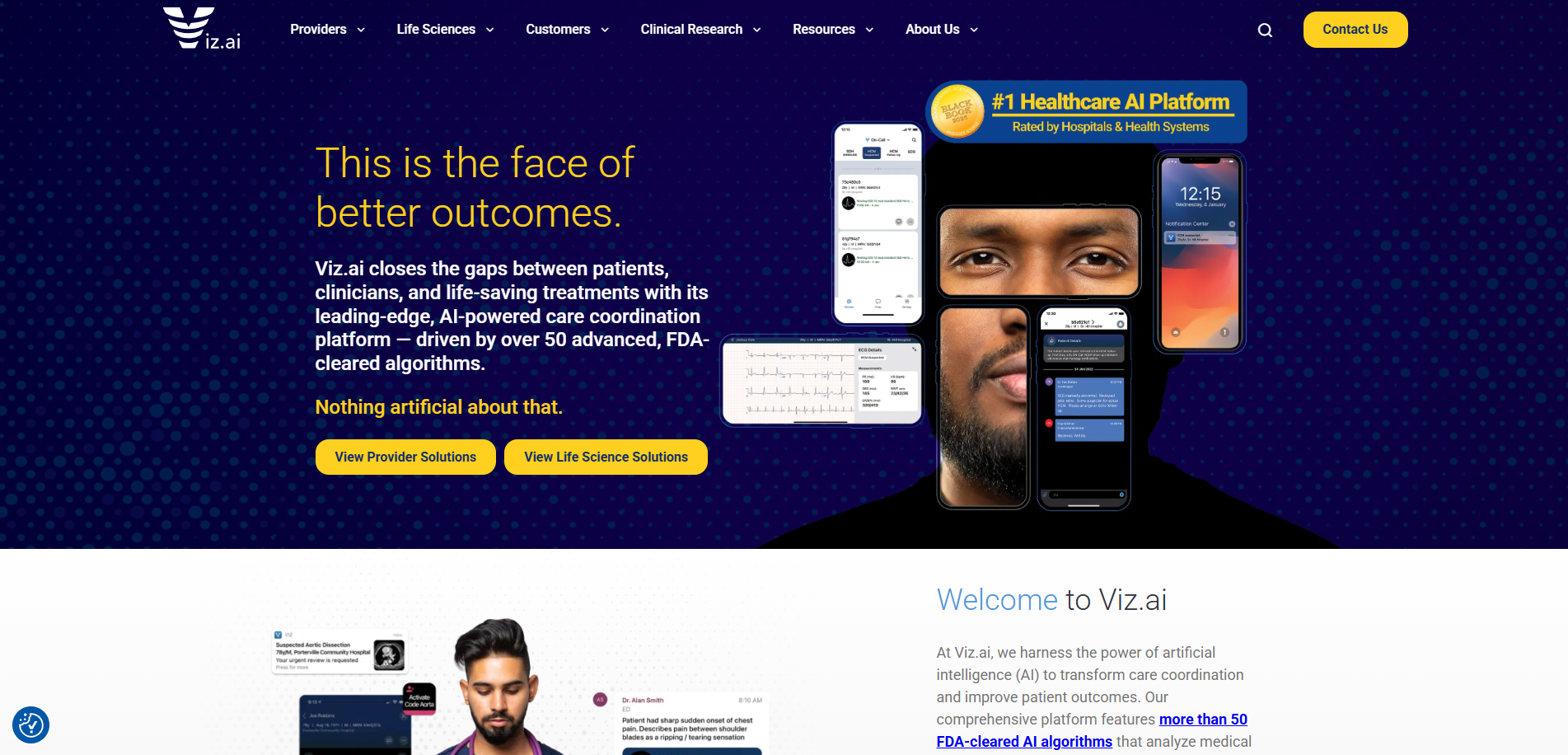
Score: 8.4/10. Highest marks for care coordination speed (10/10). Lower on routine care applicability (4/10).
Viz.ai detects time-critical conditions like large vessel occlusion strokes from imaging, then automatically alerts the appropriate care team with all relevant data attached. Reduces door-to-treatment time in stroke and cardiac emergencies. FDA-cleared.
Best for stroke centers and hospitals needing to reduce time-to-treatment for critical conditions.
Tradeoffs
- Focused on acute/emergency conditions. Enterprise-only. Less relevant for outpatient or routine care.
#7. Butterfly iQ: Best AI Tool for Point-of-Care Imaging
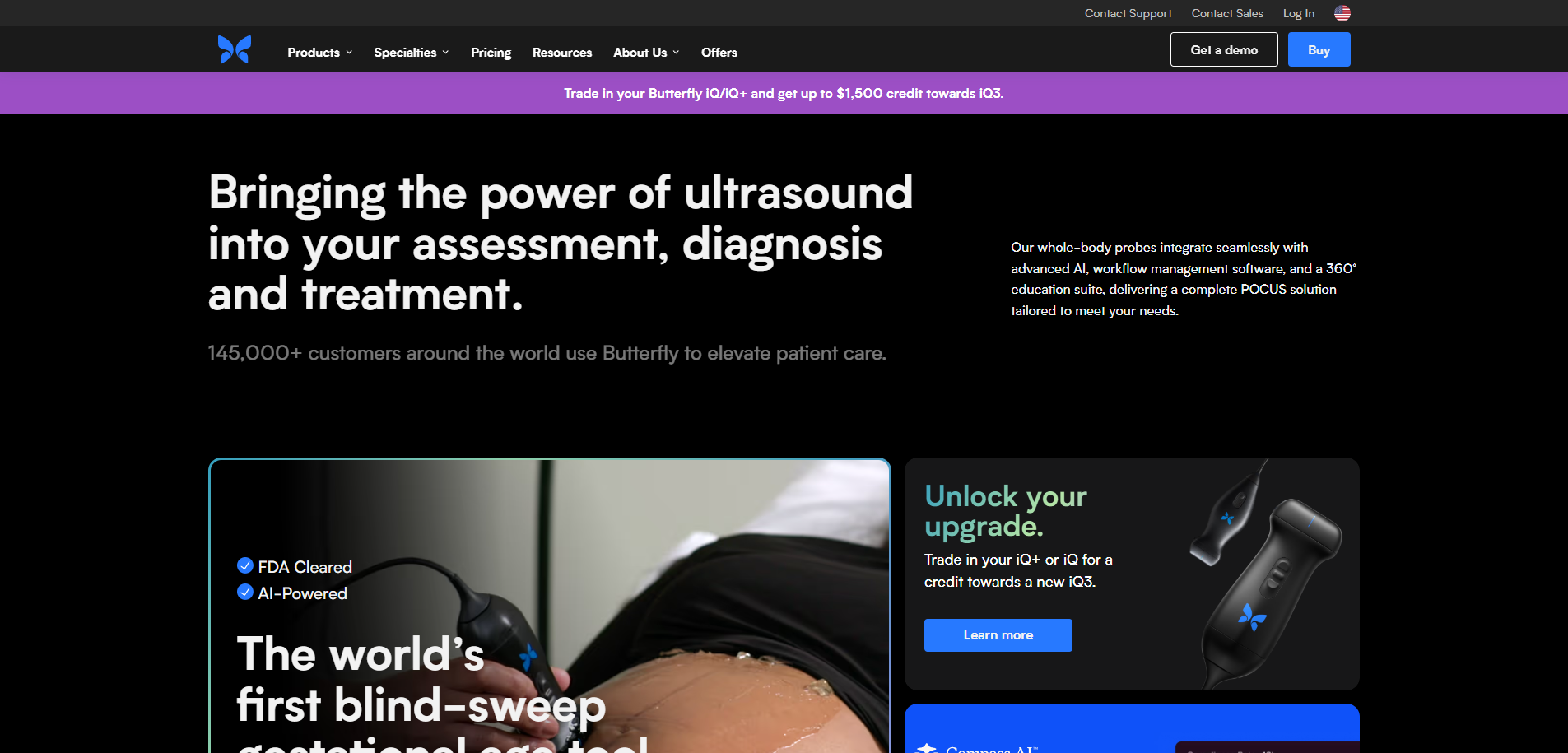
Score: 8.0/10. Highest marks for accessibility (10/10). Lower on imaging depth (6/10).
Handheld AI-powered ultrasound device that connects to a smartphone. AI guidance helps non-specialists capture diagnostic-quality images. FDA-cleared for multiple applications. Democratizes imaging in rural, emergency, and resource-limited settings.
Best for primary care, emergency medicine, and field settings needing portable, affordable imaging.
Tradeoffs
- Image quality below dedicated systems for some applications. Requires learning curve. Device cost + subscription.
Pricing: Device from ~$2,000. Cloud/AI subscription additional.
#8. Caption Health: Best AI Tool for Cardiac Imaging Access
Score: 7.8/10. Strong for accessibility (9/10). Lower on scope (5/10).
FDA-cleared AI guidance enabling non-specialist clinicians to capture diagnostic-quality cardiac ultrasound. Real-time feedback on probe positioning. Expands cardiac care access to primary care and emergency settings.
Best for primary care and emergency settings without trained echocardiography sonographers.
Tradeoffs
- Focused exclusively on cardiac imaging. Requires compatible ultrasound hardware. Enterprise deployment.
#9. Wysa: Best AI Tool for Scalable Mental Health Support
Score: 7.8/10. Highest marks for clinical validation in mental health (9/10). Lower on clinical depth for severe conditions (5/10).
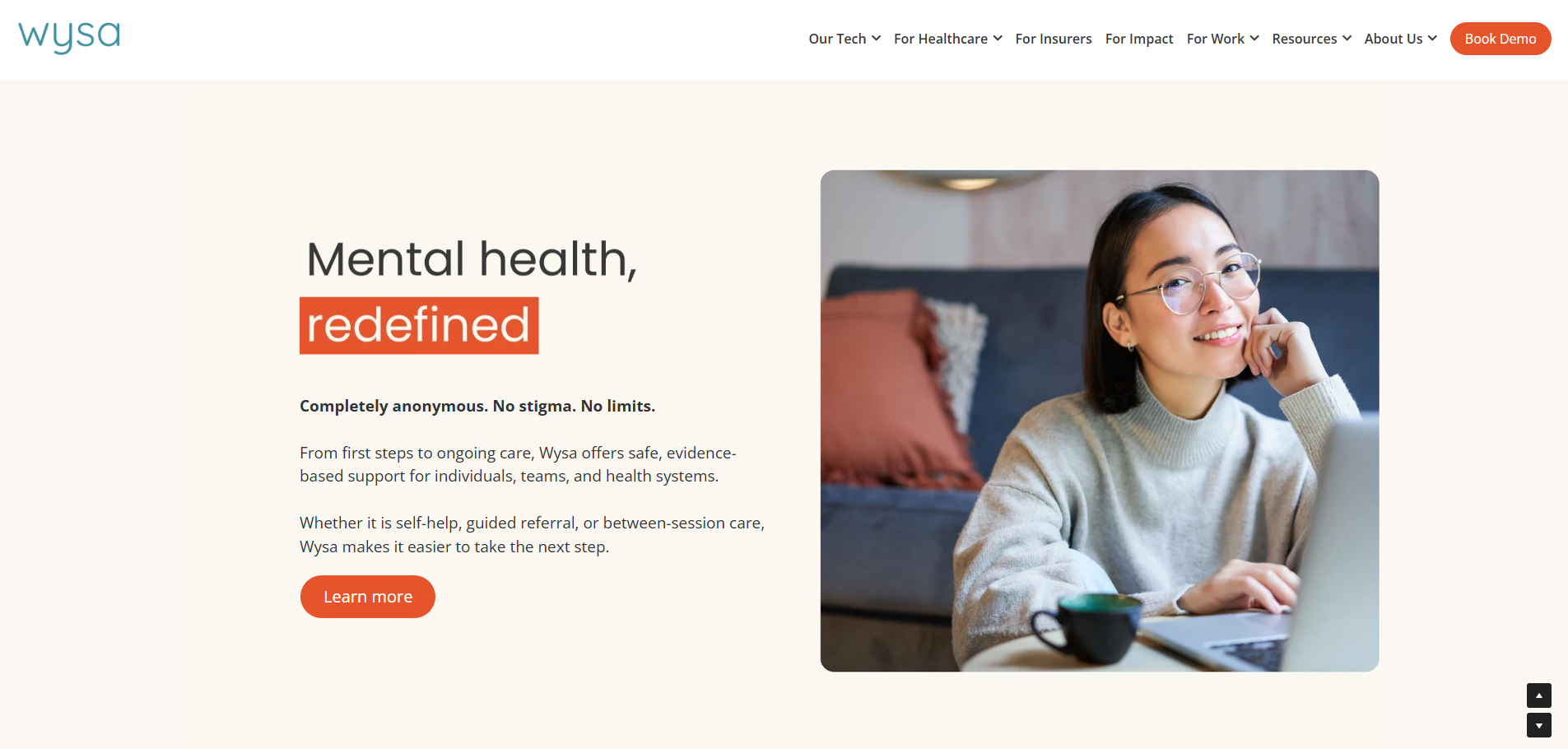
AI-powered mental health platform delivering CBT, DBT, meditation, and therapeutic exercises through conversational AI. FDA Breakthrough Device designation. Peer-reviewed RCTs. Free self-help tier plus enterprise platform for employers and health plans.
Best for employers, health plans, and health systems providing scalable, clinically validated mental health support.
Tradeoffs
- Not a replacement for clinical treatment of severe mental health conditions. Primarily text-based. Premium features behind paywall.
Pricing: Free tier available. Enterprise pricing on request.
#10. AKASA: Best AI Tool for Revenue Cycle Management
Score: 7.6/10. Strong for RCM automation (8/10). Lower on clinical applicability (N/A).
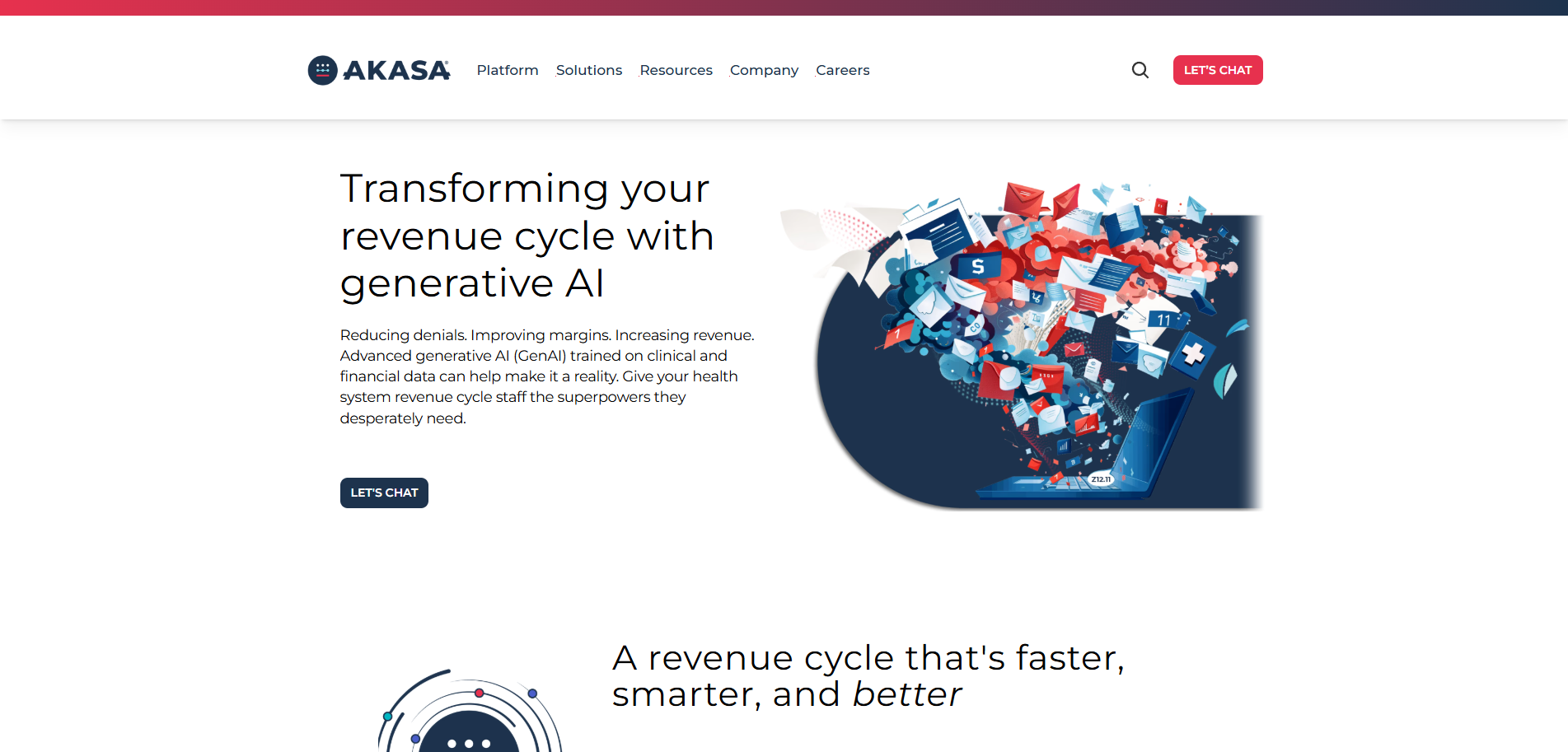
AI-powered RCM automation for medical coding, claims submission, prior authorization, and denial management. Targets the repetitive, rule-based billing work that according to McKinsey (2021) represents an estimated $265 billion in potential savings across U.S. healthcare administration.
Best for health systems and large practices automating billing, coding, and claims at scale.
Tradeoffs
- Enterprise-focused. Requires integration with existing RCM infrastructure. Not a clinical tool.
#11. IBM Watson Health: Best for Oncology Decision Support
Score: 7.2/10. Strong NLP capabilities (8/10). Lower on recent momentum and accuracy scrutiny (5/10).
Uses NLP and ML to analyze clinical notes, research, and patient records for personalized oncology treatment recommendations. Deployed in cancer centers globally. Has faced scrutiny over accuracy in some deployments. IBM has divested parts of Watson Health, though the clinical decision support capabilities continue.
Best for cancer centers needing AI-powered clinical decision support in oncology.
Tradeoffs
- Accuracy concerns in some deployments. IBM divestiture creates uncertainty. Enterprise complexity. 3.8/5 G2 rating.
#12. DeepMind Health (Google): Best for Ophthalmology Research
Score: 7.0/10. Highest marks for research quality (10/10). Lower on commercial availability (2/10).
AI models for early detection of diabetic retinopathy and macular degeneration, developed with Moorfields Eye Hospital. Specialist-level accuracy interpreting retinal OCT scans across 50+ conditions. Research partnership model, not a commercially available product.
Best for ophthalmology research institutions and NHS-affiliated eye care providers.
Tradeoffs
- Not commercially available for general purchase. Research partnership model only. Limited to ophthalmology.
Questions to Ask Before Purchasing AI Tools for Healthcare
1. Clinical validation
Is the tool FDA-cleared? Are there peer-reviewed studies? What outcomes have production deployments achieved?
2. HIPAA compliance
Does the vendor sign a BAA? Where is data stored? What encryption and audit logging is in place?
3. Integration depth
Does the tool connect natively to your EHR? What happens when an integration fails mid-workflow?
4. Vendor lock-in
Can you export data and workflows if you switch? Are you dependent on a single cloud provider?
5. Total cost of ownership
What are the implementation, training, and ongoing maintenance costs beyond the subscription price?
6. Escalation and oversight
How does the tool handle edge cases? Is there a clear path to human review when the AI is uncertain?
7. Growth ceiling
What happens when your volume or complexity exceeds the platform's current capability?
Key Features to Look for in Healthcare AI Tools
HIPAA Compliance by Design
Not an add-on. The platform's architecture should enforce compliance through encryption, BAAs, audit logging, and data residency controls. Purpose-built healthcare platforms like Keragon (SOC 2 Type II + HIPAA) set the standard. See our guide to HIPAA-compliant workflow automation software.
EHR and Backend Integration
Pre-built connectors to the systems your organization actually uses. The real test is not whether the vendor lists an integration but whether it handles real-time data sync, error recovery, and bi-directional updates.
Clinical Validation and Regulatory Status
FDA clearance, peer-reviewed evidence, and documented production outcomes. Marketing claims are insufficient for tools that affect clinical decisions.
Workflow Automation Beyond Point Solutions
The highest-impact deployments connect AI outputs to downstream workflows. A flagged scan should trigger a specialist notification. A completed intake form should update the EHR. A coded claim should submit automatically. Pre-built workflow templates provide a starting point for these automations.
Transparent Pricing and TCO
Enterprise pricing without public benchmarks makes comparison difficult. Factor in implementation, integration, training, and scaling costs alongside the quoted subscription.
Which AI Tool Is Right for Your Healthcare Organization?
- Need to connect and automate workflows across multiple healthcare systems: Keragon. No-code, HIPAA-compliant, 400+ integrations.
- Need real-time radiology triage: Aidoc. 50+ FDA-cleared algorithms, 2,000 hospitals.
- Need precision oncology treatment planning: Tempus. Genomic profiling + AI, 65% of U.S. academic medical centers.
- Need to reduce physician documentation burden: Abridge. Ambient AI scribing with EHR integration.
- Need AI-assisted pathology: PathAI. FDA-cleared, deployed nationally through Labcorp.
- Need faster stroke treatment: Viz.ai. FDA-cleared detection + automated care team notification.
- Need portable point-of-care imaging: Butterfly iQ. Handheld, smartphone-connected, AI-guided.
- Need cardiac imaging without a specialist: Caption Health. FDA-cleared AI guidance for non-specialists.
- Need scalable mental health support: Wysa. FDA Breakthrough Device designation, peer-reviewed evidence.
- Need to automate billing and claims: AKASA. AI-powered RCM for coding, claims, and denial management.
Is Keragon Worth It for Healthcare Workflow Automation?
Generic automation tools (Zapier, Make, n8n): Choose if you do not handle PHI, do not need healthcare-specific connectors, and your workflows are simple. Not HIPAA compliant. No BAA. No healthcare integrations.
Custom development: Choose if you have an engineering team, months of runway, and budget for ongoing maintenance. Maximum control, maximum cost.
Keragon: Choose if you handle PHI, need to connect healthcare-specific systems (EHRs, billing, scheduling), require HIPAA + SOC 2 compliance, and want to deploy in days, not months. Purpose-built for healthcare. 500+ organizations. 400+ integrations. No engineering required.
Keragon is for healthcare teams building automation as a durable operational layer, not for teams that need a single webhook.
Frequently Asked Questions
What are the best AI tools in healthcare in 2026?
The best AI tools in healthcare span workflow automation (Keragon), radiology (Aidoc), precision medicine (Tempus), clinical documentation (Abridge), pathology (PathAI), stroke detection (Viz.ai), portable imaging (Butterfly iQ), cardiac imaging (Caption Health), mental health (Wysa), revenue cycle management (AKASA), and clinical decision support (IBM Watson Health).
What is the best AI tool for healthcare workflow automation?
Keragon is the leading HIPAA-compliant workflow automation platform for healthcare. It connects 400+ healthcare tools including EHRs like Athenahealth and Elation Health, billing platforms, scheduling tools, and communication systems without custom engineering.
What is the best AI tool for radiology?
Aidoc is the leading AI radiology platform with 50+ FDA-cleared algorithms deployed across nearly 2,000 hospitals globally. It provides real-time triage, worklist prioritization, and automated care team notification for critical findings.
What is the best AI tool for clinical documentation?
Abridge is the leading ambient clinical documentation platform. It uses AI to transform doctor-patient conversations into structured clinical notes in real-time, integrating directly with EHRs. Other notable options include Suki and Nuance DAX Copilot (Microsoft).
What is the best AI tool for mental health?
Wysa holds FDA Breakthrough Device designation and has peer-reviewed clinical evidence from randomized controlled trials. It delivers CBT, DBT, and therapeutic exercises through conversational AI with optional escalation to licensed therapists. Woebot is an alternative positioned as a prescription digital therapeutic.
How do AI tools integrate with EHR systems?
Integration approaches vary. Some tools (Abridge, Aidoc) offer native EHR integrations. Others connect through workflow automation platforms like Keragon, which provides pre-built connectors to 400+ healthcare tools. The automation layer ensures data flows between systems without manual intervention or custom API development.
What are the HIPAA requirements for AI tools in healthcare?
Any AI tool handling protected health information (PHI) must: sign a Business Associate Agreement (BAA), encrypt data in transit and at rest, maintain audit logs, and implement access controls. SOC 2 Type II certification provides additional assurance. See our full guide to HIPAA-compliant workflow automation.
Can AI replace doctors?
No. AI tools in healthcare augment clinical decision-making, automate administrative tasks, and improve diagnostic accuracy. They do not replace physician judgment, patient relationships, or clinical expertise. Every credible healthcare AI tool includes human oversight and escalation paths.
Related Articles


Related Articles